


The Beginning of Sustainability: How Indonesian Trade Unions Are Carrying a Data-Driven Approach Forward on Their Own
When the Makin Terang project officially ended in 2025, Indonesia's garment and textile unions didn't stop. They took ownership and kept going. Read about their strategies and success stories
23 June 2026
At the start of 2026, Makin Terang returned with a different kind of energy. The programme continued because union partners at the company, regional, and national levels had been asking for it — consistently and clearly. That kind of demand speaks for itself.
With an extension running through June 2026, WageIndicator and its union partners share a common goal: to ensure that a data-driven, worker-centred approach continues to live on without WageIndicator's support holding it up.
The union partners involved remain the same: SPN (National Trade Union), FSP TSK-SPSI (Textile, Garment, and Leather Workers Federation), FSB GARTEKS (Garment, Craft, Textile, Leather, and Industrial Center Workers Federation), and GSBI (Indonesian Workers' Union Alliance).
For the union partners themselves, this extended period serves as a transition, a window to integrate everything that's been built into the ongoing work of their organisations.
On the data collection side, unions are now independently gathering bipartite negotiation data, Collective Bargaining Agreements (CBA), and WorkerPriorityPoll (WPP) results. On the training side, activities include learning circles, national and regional Training of Trainers, self-organised training, and safeguarding sessions. Coordination continues through regional Focus Group Discussions led by union executives.
Let’s take a look at strategies and stories from our union partners to run Makin Terang approaches and activities independently.
Serikat Pekerja Nasional (SPN)
Nine Rounds of Negotiation to Secure a Decent Wage Increase
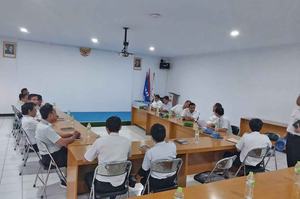
From the very beginning of January 2026, SPN from a yarn factory in Tangerang set out on what would become a long road of bipartite negotiation. Eleven union representatives sat across from ten representatives of the management. Drawing from worker aspirations, SPN built their case around a clear demand: a wage adjustment that reflected actual economic conditions and company performance.
SPN had put forward an initial wage increase proposal of Rp951,260 per person. The number was anchored in the 2025 national inflation rate (2.92%), the regional minimum wage increase (6.5%), and company profit figures. Management responded with Rp180,135.
From there, both sides moved slowly, incrementally, meeting by meeting. The union brought its number down in stages; management edged theirs upward.
What strengthened PSP SPN's bargaining position throughout was data. They drew on WageIndicator's living wage comparisons, macroeconomic indicators including inflation and 2026 regional minimum wage projections, the sectoral minimum wage figure of 3%, the company's 2025 profit data at 3%, and a detailed dataset on seniority and attendance records from a sample of 145 workers. These weren't decorative figures. They were specific, verifiable, and hard to argue away.
By the ninth meeting, in mid-May 2026, an agreement was reached. The wage increase was set at IDR395,000 per worker, with an additional one-time PSKU compensation payment of IDR240,000 for permanent workers.
Putting the Worker Priority Poll to Use and the Challenges Along the Way
In early May 2026, the National Board of SPN visited the regional branches in Banten to share the results of the Worker Priority Poll (WPP), explore how the data had been applied, and look at ways to integrate the findings into bipartite negotiations and collective bargaining agreements.
Of the ten companies represented, six had successfully used WPP data to push for improvements in working conditions. The concerns that surfaced were close to workers' everyday lives — the canteen, parking space, building renovation, rest break hours, and separate women's toilets. Practical, tangible, and real.
One insight that emerged: informal settings can be surprisingly effective spaces for sharing worker aspiration data. Lobby sessions, morning coffee chats ("Ngopi Pagi"), and casual forums sometimes created more room for honest conversation than formal negotiating tables.
SPN also noted that the WPP instrument had demonstrated its credibility as an advocacy tool. This was especially visible in workers' efforts to push back against proposed cuts to their pension social security contributions — where having documented, validated data made all the difference.
FSP TSK-SPSI
Scaling Up Makin Terang Training Independently and Broadly
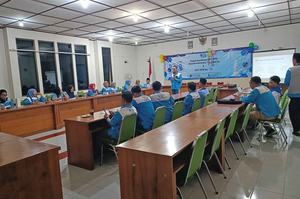
The National Board of FSP TSK-SPSI welcomed Makin Terang's continuation by expanding both the reach and the participation of their independent training activities. Between April and June 2026, the national leadership organised four self-run training sessions across West Java, East Java, Central Java, and Banten.
With 156 participants in total, TSK SPSI managed all materials, administration, and operational needs entirely on their own: no outside facilitation required.
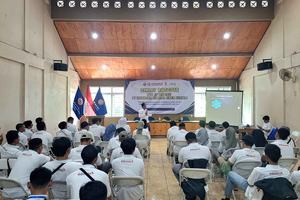
In Bandung, West Java, TSK SPSI went a step further by hosting a national Training of Trainers aimed at 80 women members, equipping them to become facilitators within their respective workplace unions. The DPP committed to providing follow-up support to help each participant apply what they'd learned at the regional and unit level.
FSB GARTEKS
Building Capacity in Organising, Gender Mainstreaming, and Negotiation
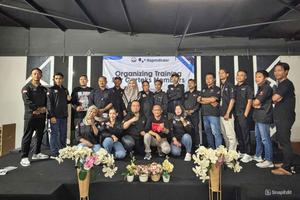
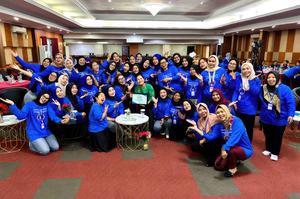
Like their fellow union partners, FSB GARTEKS began with a Focus Group Discussion to coordinate their direction for Makin Terang's continuation. The FGD, involving 11 participants, took place on 12 April 2026 in Jakarta. From that conversation, GARTEKS designed three distinct training streams.
The gender mainstreaming training brought together 21 women and 9 men, with the aim of building participants' understanding and capacity to integrate gender perspectives across organisational programs, policies, and activities.
With the urgency of collective bargaining on their minds, GARTEKS also ran a dedicated negotiation training in Jepara on 13–14 May. Twenty-one participants from union commission leadership took part, working through the concepts, strategies, and techniques of effective negotiation using group discussion, case studies, role-plays, and simulations. Topics covered ranged from core negotiation principles and effective communication to strategy development and managing conflict during negotiations.
Finally, GARTEKS held an organising training, also in Jepara, facilitated by Trisnur Priyanto as General Chairperson and Masroni as Head of the Development Department. The training aimed to strengthen participants' ability to build systematic organising plans, deepen member engagement, grow solidarity networks among workers, and drive membership development. By the end, participants had completed sectoral and regional mapping for potential organisational growth and produced concrete follow-up plans, including membership targets, outreach strategies, and steps to strengthen their unions in their respective areas.
GSBI
Building Networks to Support Data-Driven Organising
Throughout March to May, GSBI wove network-building work into their Makin Terang organising activities. The strategy was clear: strengthen both organising capacity and legal advocacy at the same time.
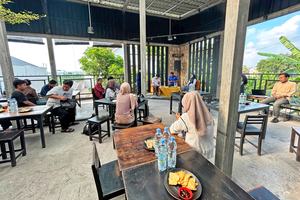
To that end, DPP GSBI first reached out to establish a working relationship with the Semarang Legal Aid Institute (LBH Semarang). With termination cases and union-busting remaining an ever-present threat, having LBH Semarang in their corner means stronger legal advocacy and litigation capacity when it matters most.
Beyond legal partnerships, GSBI also facilitated meetings with students at three universities in Central Java: Universitas Kristen Satya Wacana, Universitas Islam Negeri Walisongo, and Universitas Diponegoro. Engaging students is nothing new for GSBI; the organisation has long been known for building bridges with young people and academic communities to bring fresh voices into the labour movement.
Finally, GSBI connected with the Indonesian Migrant Workers Union (Serikat Buruh Migran Indonesia) in the Tegal area of Central Java. Migrant workers face some of the most precarious conditions: little to no employment protections, minimal welfare guarantees, and GSBI's outreach focused particularly on migrant families living in the region.
Standing with Workers Facing Unlawful Termination
In February 2026, a garment factory in Sukabumi, West Java abruptly laid off 250 of its workers. The timing made it worse: the terminations came just before Eid al-Fitr and the legally required holiday allowance (THR) payments. Under Indonesian labour law, this was a clear violation.
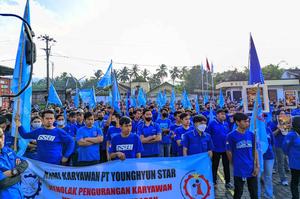
GSBI moved quickly. They drew up an action plan, began advocacy work, and organised a two-day strike.
At least 60 percent of the affected workers joined the strike. It is enough to leverage the workers’ bargaining position significantly. The action also held firm on one crucial point: not a single worker had their wages cut for participating.
The results came in over the months that followed, and they were significant. GSBI secured a delay in the termination timeline, a reduction in the number of workers ultimately affected, fulfilment of all legal entitlements owed to those who were let go. Ultimately, the reinstatement of 90 percent of the workers who had been dismissed.
After seeing what collective action and organised advocacy could achieve, many of those reinstated workers signed up to join GSBI themselves.
Authors

Muhammad Fakhri
Data and Communication Specialist - South-East Asia


