


Significant Labour Law Changes
The start of 2026 marks significant labour law changes; especially for Pakistan where the reform replaced more than two dozen outdated laws. Read more about the labour law reform in Pakistan, South Korea, Bulgaria and Cyprus.
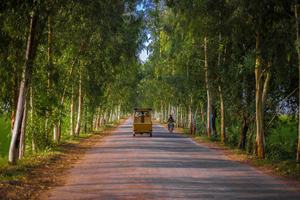
Road to a village, Punjab Pakistan.
Pakistan’s most comprehensive labour law reform in 78 years
On February 10th 2026, the Punjab province in Pakistan enacted the Punjab Labour Code 2026. This is the most comprehensive reform in Pakistan’s 78-year history which replaced a patchwork of more than two dozen outdated labour laws. The Punjab Labour Code directly and indirectly affects 98 million working-age people in Punjab alone! Punjab’s labour force of 48 million people is around 60% of Pakistan’s total labour force (83 million).
Other impacts of the Punjab Labour Code:
- Finally recognition on how people actually work today: on farms and construction sites, in homes and markets, on digital platforms, and in micro-enterprises that employ the vast majority of Pakistan’s workforce;
- Coverage for “everyone who works”, not just formal factory workers. The Code is designed to bring informal, contract, agricultural, domestic, home-based, and gig workers into the legal net and provide them with access to labour protections;
- Regulated contract and agency work: Fixed-term and agency arrangements are allowed, but are subject to strict safeguards: contracts must be genuine, time-bound, and provide the same core protections as permanent workers;
- First-ever protections for gig workers in South Asia: ride-hail and delivery workers are protected under the Punjab Labour Code instead of being treated as “independent contractors”;
- Equality, non-discrimination and gender justice: The Punjab Labour Code explicitly bans discrimination (including sex, gender, pregnancy, caste, disability and more), establishes equal pay for work of equal value, and establishes an Equal Employment Opportunity Office to handle complaints.
Labour Law updates in South Korea
- Paid Paternity leave has increased from 10 to 20 days to encourage more balanced caregiving.
- For births involving premature or low-birth-weight infants, maternity leave is extended from 90 to 100 days.
- Leave for infertility treatments has doubled to 6 days per year, with 2 days fully paid by the employer.
- Parents can now request reduced working hours until their child is 12 years old (6th grade), a significant jump from the previous age limit of 8 years (2nd grade).
- To safeguard maternal health, pregnant employees are eligible for reduced working hours during the first 12 weeks and the final 8 weeks (starting from week 32) of pregnancy.
Flexible working arrangements in Bulgaria
A 2025 amendment to the Labour Code allows parents of children up to 12 years (previously 8 years) to request flexible working arrangements.
Labour Law insights for Cyprus
- The Maternity Protection (Amendment) Law 2025 extends the "nursing hour" (reduced working hours) period from 9 months to 12 months post-childbirth.
- Parental leave entitlement for Single or Widowed Parents is extended to 23 weeks, and for parents of children with disabilities, the entitlement is extended to 20 weeks. Earlier, it was 18 weeks for all the parents
- Prevention and Combating of Violence and Harassment in the Workplace Law of 2025 introduces a comprehensive system to prevent, investigate and sanction workplace violence/harassment (including sexual harassment)
Updates to the WageIndicator Labour Law database
As of this year, we increased the number of standardised questions from 203 to 206 to gain even more insights into the Labour Laws throughout the 120 countries that we have in our database. By adding these parameters, we have successfully integrated 360 new data points. In addition to these data points, we also fully updated the Labour Law Country Profiles for 15 countries.
Fully updated Labour Law Country profiles
French Africa: Cameroon, Central African Republic, Chad, Congo, DRC, Gabon, Guinea.
Asia: South Korea, Pakistan, Sri Lanka, Vietnam
Europe: Belgium, Bulgaria, Cyprus, Czech Republic, Finland
Additions to our standardised questions
What is the number of statutory paid public holidays?
What is the duration of rest breaks during the workday?
What is the duration of the daily rest period that workers should get between shifts or workdays?

