


Comparing Living Wages in garments: Myanmar, Ethiopia, Bangladesh and Egypt
Discover Living Wage gaps in the garment sector: Myanmar, Bangladesh, Ethiopia, Egypt compared via simple 30-100% progression steps.
The need for implementing Living Wages in the garment sector is often discussed. In most garment producing countries, the gaps between Minimum Wages and actual paid wages in relation to Living Wage levels are large. However, not all countries have the same gap, and the steps to get to a Living Wage might differ.
A Simple Step-by-Step Approach to Living Wages
That’s why we and relevant experts started thinking about how to simplify the steps towards a Living Wage. The steps show the percentages of the Living Wage, like 30%, 50%, 75% and 100% to see what progression can look like. WageIndicator initially presented this in Myanmar in discussion with a group of factory owners, brands, worker rights groups and trade unions.
What the Data Shows in Myanmar, Ethiopia, Bangladesh and Egypt
The result? It sparked an open discussion about how wages are now somewhere close to C or B or A. For this analysis, we compared Myanmar, Ethiopia, Bangladesh and Egypt. All countries that produce garments, but that operate in vastly different political and economic conditions. Do these simple steps help to get more clarity on progression towards Living Wages?
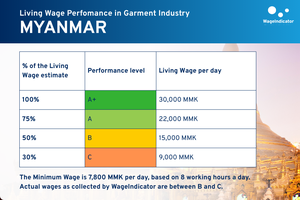
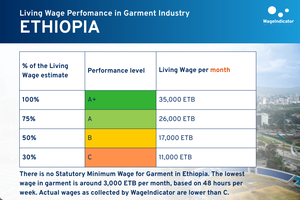
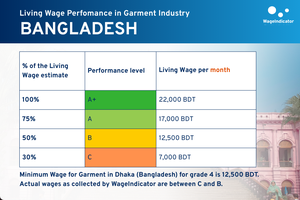
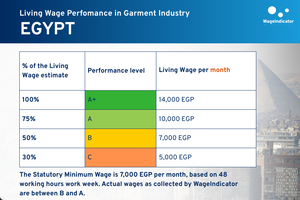
Tables: March 2026.
The Living Wages data used is guidance October 2025. The numbers from the tables above are rounded off and all come from WageIndicator's Minimum Wage, Living Wage and Salary and Wages databases. WageIndicator does research on wages and cost of living in all countries mentioned above.
Authors

Paulien Osse

