Annual Report 2025
Annual Report 2025
The world of work, made visible
Data that works.
Explore the 2025 report
Move through the year by theme: impact, data, tools, AI and bargaining, Makin Terang, projects, people, and finance.
Foreword
A message from our leadership
2025 was a year of remarkable progress and transformation for WageIndicator.
2025 was a year of remarkable progress and transformation for WageIndicator. As we navigated a world of work marked by rapid technological change, economic uncertainty, and evolving labour dynamics, our mission to promote transparency in the labour market remained steadfast. This year, we not only expanded our reach and deepened our research and data collection but also laid the groundwork for changes in the front- and backend of our data infrastructure.
One of our proudest achievements was the expansion and enhancement of our core databases. We audited and improved 836 historical labor law profiles across 122 countries, refining our Labour Law Database Codebook with 16 new questions and 70 revised ones. Our Minimum Wage Database now covers 216 countries and territories, with 25,121 published minimum wage rates, including 15,591 from India alone.
Read full ForewordClose Foreword
Living Wages - despite political and therefore regulatory uncertainty - continued to gain momentum. We collected and provided Living Wage estimates for 182 countries and 3,947 regions, and our Cost of Living and Living Wage Database now provides critical insights for stakeholders globally. The growing demand for our data is reflected in increased downloads, client requests, and long-term partnerships, which also underscores the trust placed in our work. We also celebrated the 10-year anniversary of our Data Academy / Makin Terang program in Indonesia, which has reached 48,778 workers, strengthened 300 unions, and improved the working conditions of over 64,000 workers through better collective bargaining agreements and social dialogue.
In the realm of collective bargaining, 2025 was a turning point. Our collaboration with UNI Europa, CELSI, and the Friedrich Ebert Stiftung on AI and algorithmic management in collective agreements revealed a significant shift: while only 20% of unions had AI clauses in 2024, this number grew substantially in 2025, with Spain and Italy leading the charge in negotiating pragmatic and specific AI provisions. Our interactive dashboard of AI clauses in CBAs became a vital resource for unions worldwide, inspiring action and fostering peer learning. This project highlighted the critical role of collective bargaining in shaping the future of work, ensuring that technological advancements benefit workers rather than marginalize them.
2025 was also a year of strategic preparation. We began a major overhaul of our websites and data infrastructure, responding to shifts in digital behavior and ensuring our platforms remain accessible, intuitive, and aligned with the needs of our users. As we look ahead to 2026, we are excited to unveil a new brand identity, website, and tagline, alongside hosting our second international global conference in Pune, India. These milestones reflect our commitment to innovation, transparency, and collaboration as we continue to shape a future where decent work and fair pay are realities for all.
None of this would have been possible without the unwavering support of our partners, donors, and the global community of workers, researchers, and advocates who share our vision. Thank you for being part of this journey. Here’s to another year of impact, growth, and collective progress!
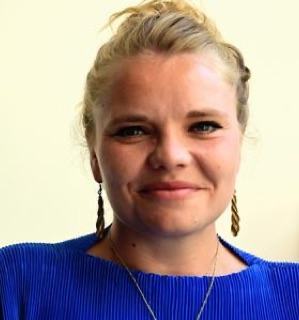
Fiona DragstraGeneral Director

Prof. Rob van TulderChair of the Supervisory Board
How evidence reached people
The year's work moved through newsletters, public tools, events, stories, and dashboards that helped people act on labour market evidence.
websites in 70+ languages
Explore Website Social media reach 145k+LinkedIn impressions and YouTube views
Newsletter stats 286k+newsletter sends across the year
Explore Newsletters Event stats 47events hosted or joined
See eventsLiving Tariff tool
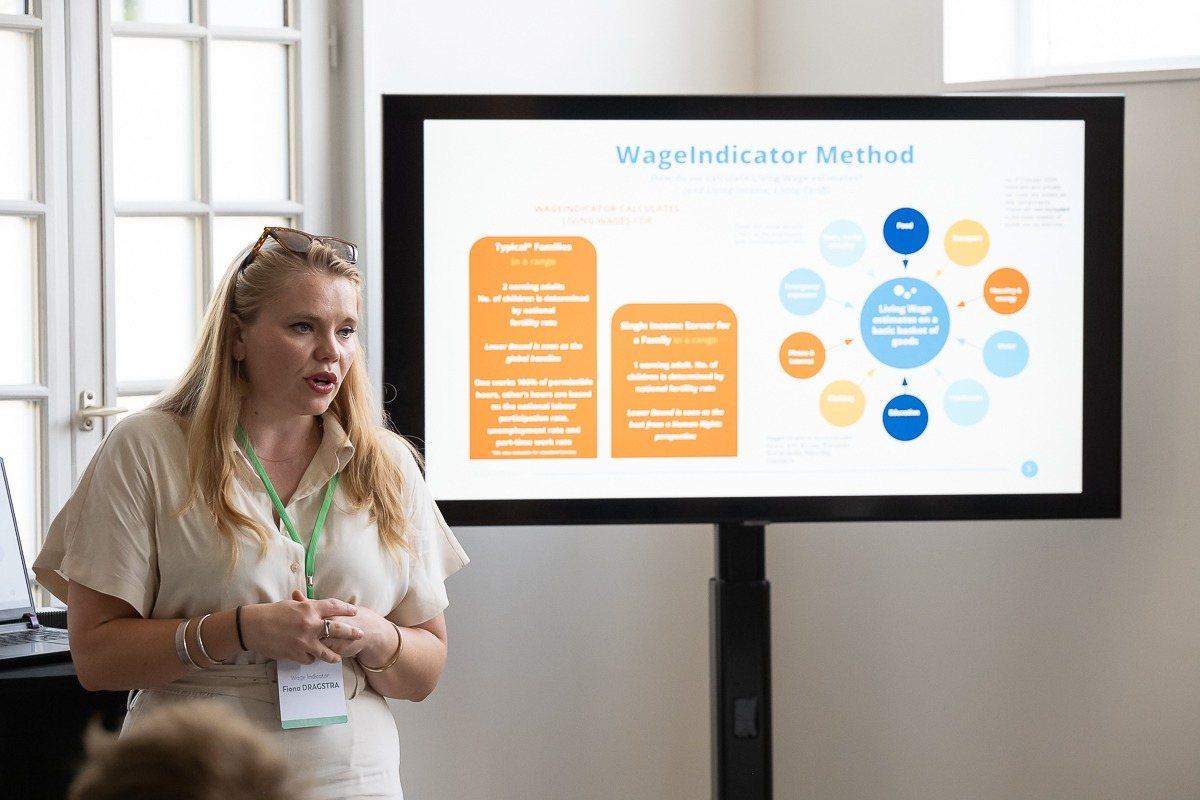
The Living Tariff tool helps self-employed and gig workers understand the daily income needed to cover work costs, taxes, and living expenses.
Open Living TariffAI clauses made visible in bargaining
The AI-in-CBA dashboard turned agreement language into a public evidence base.
Open dashboardMakin Terang continued after the project
A follow-up story showed Indonesian unions carrying the data-driven approach forward.
Read storyIndia Workforce Index moved into co-design
The FLAME University event brought data work, partner discussion, and India's workforce landscape into the same room.
Read event pageThe data backbone
Quality assurance of our databases
In 2025, verification and depth mattered as much as expansion: a new Minimum Wage tool went live, 836 historical Labour Law profiles were reviewed, and nearly 170,000 data points were corrected.
Explore all databases Minimum Wage
25,121 rates
Across 216 countries, with 125 countries revising wages in 2025.
Explore database
Minimum Wage
25,121 rates
Across 216 countries, with 125 countries revising wages in 2025.
Explore database
 Labour Law
122 countries
836 historical profiles reviewed; Codebook revised to 203 questions.
Explore database
Labour Law
122 countries
836 historical profiles reviewed; Codebook revised to 203 questions.
Explore database
 Collective Agreements
3,604 agreements
Across 76 countries, with 447 new agreements added.
Explore database
Collective Agreements
3,604 agreements
Across 76 countries, with 447 new agreements added.
Explore database
 Taxes & Social Security
198 / 207 countries
Quarterly updates to income tax and social security records.
Explore database
Taxes & Social Security
198 / 207 countries
Quarterly updates to income tax and social security records.
Explore database
Minimum Wage modernisation
A new Minimum Wage system improved the tracking of statutory rates, revisions, and time-series quality.
Living Wage
Publicly available Living Wage estimates for 182 countries and 3,947 regions within, as well as an updated methodological report and guidance.
Labour Law quality assurance
Historical profiles were reviewed against a revised 203-question codebook, making country profiles more comparable.
Collective Agreement evidence
3,604 agreements make bargaining language visible across countries, sectors, and new AI topics.
Evidence journey
From local source to public decision
Every published figure is built from local evidence, expert review, and comparable data, then returned to workers, employers, researchers, unions, and policymakers.
- CollectPrices, wages, laws, agreements, surveys
- StructureComparable records, time series, country datasets
- ReviewLocal expertise, research checks, validation
- PublishWebsites, tools, indexes, newsletters, events
- UseNegotiation, research, policy, public dialogue
Field evidence
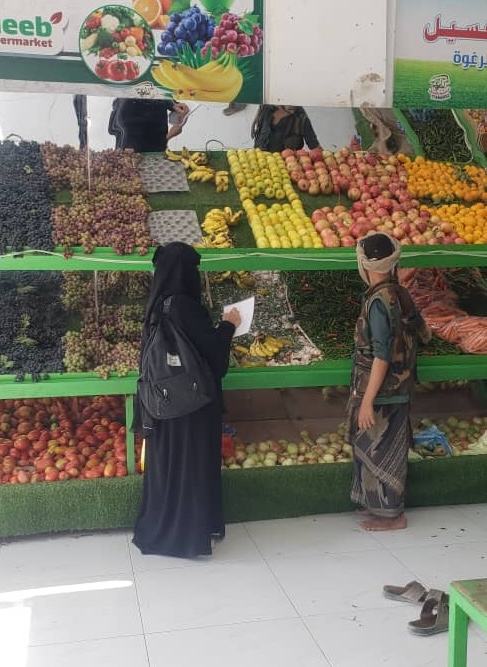
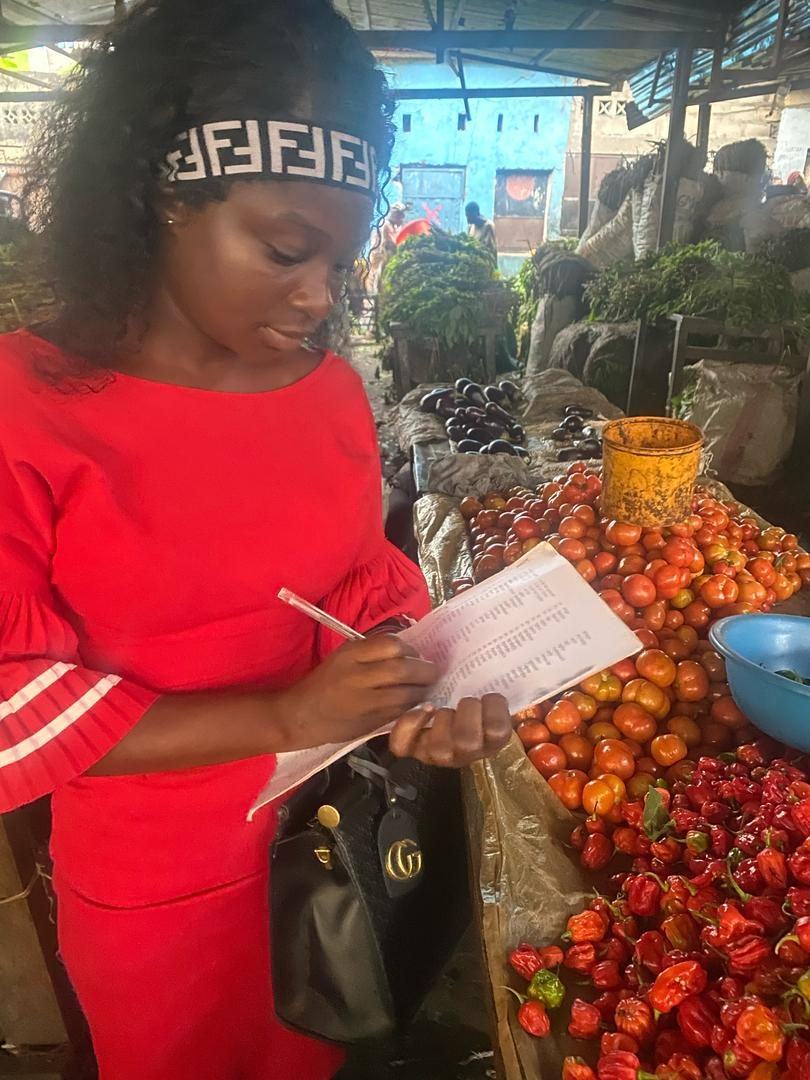
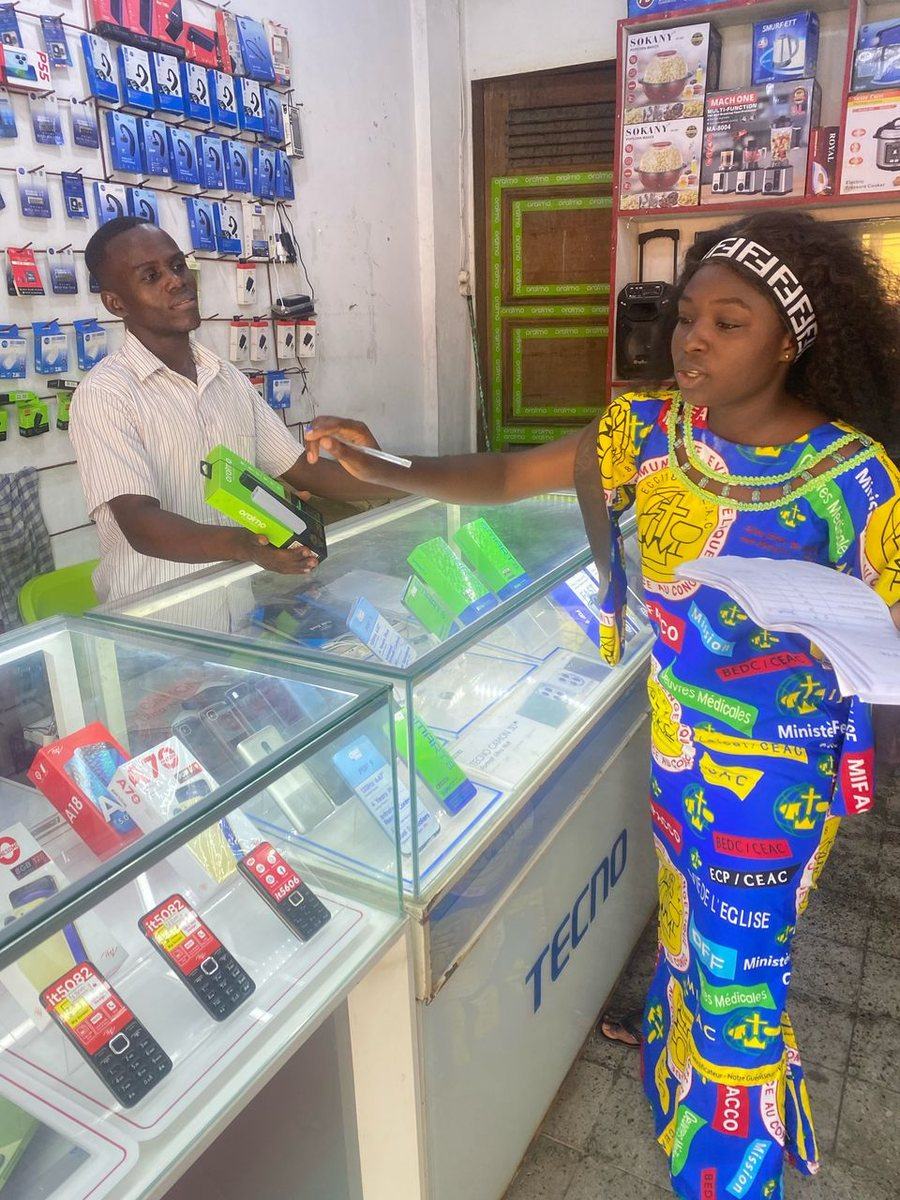
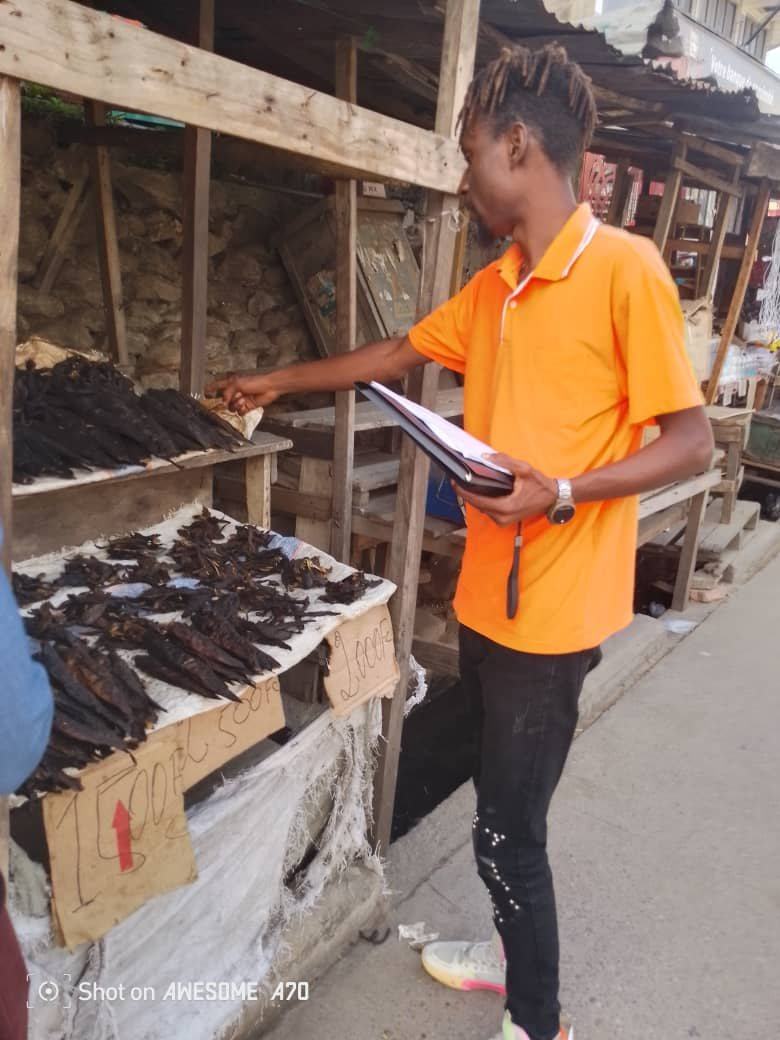
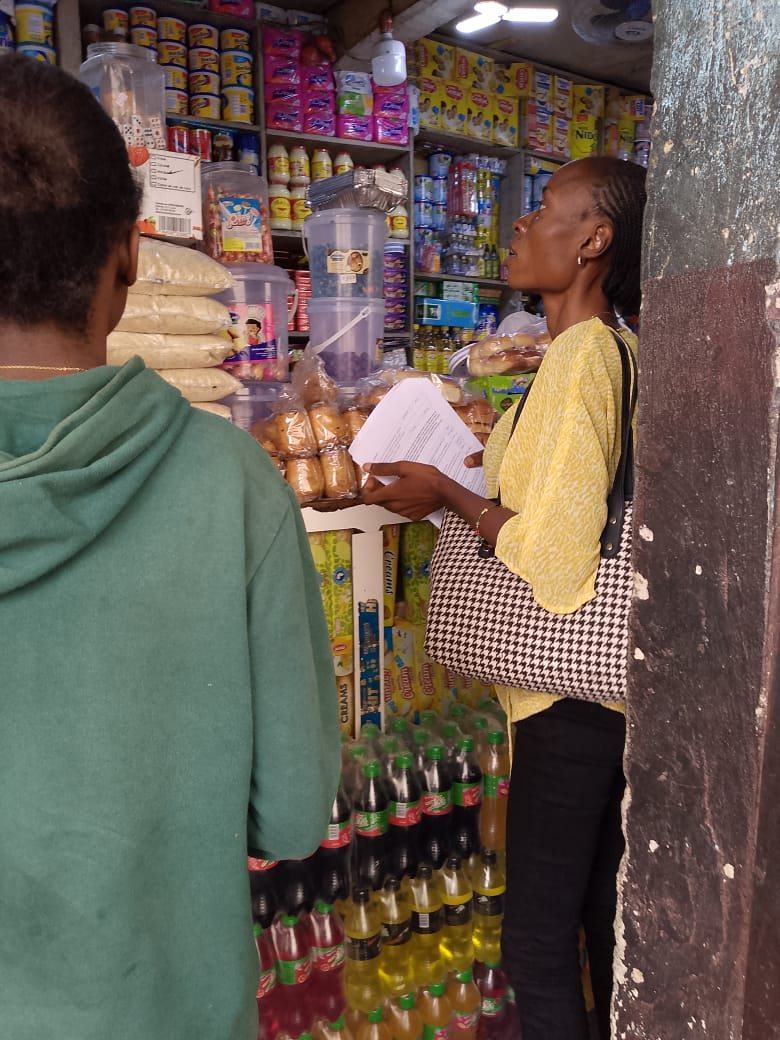
Data starts with people in real places
Behind the public databases is a network of local data collectors collecting prices, wages, and issues around working conditions, and local evidence in shops, markets, workplaces. This is combined with ongoing engagement with trade unions, small and big employers and multistakeholder initiatives.
Tools for action
Turning data into decisions
WageIndicator tools help workers, employers, unions, researchers, and policymakers use wage and labour-rights evidence in decisions, negotiations, research, and policy.

Minimum Wage vs Living Wage
Compares statutory Minimum Wages with Living Wage estimates across 173 countries.
Open comparison
GapCheck
Compares a basic wage against the WageIndicator Living Wage benchmark across 186 countries.
Open GapCheck
AI in Collective Bargaining
A public dashboard showing how CBAs address AI and algorithmic management.
Open dashboard
Living Tariff
Built for self-employed and gig workers with support from GIZ, now live in six geographies.
Open Living Tariff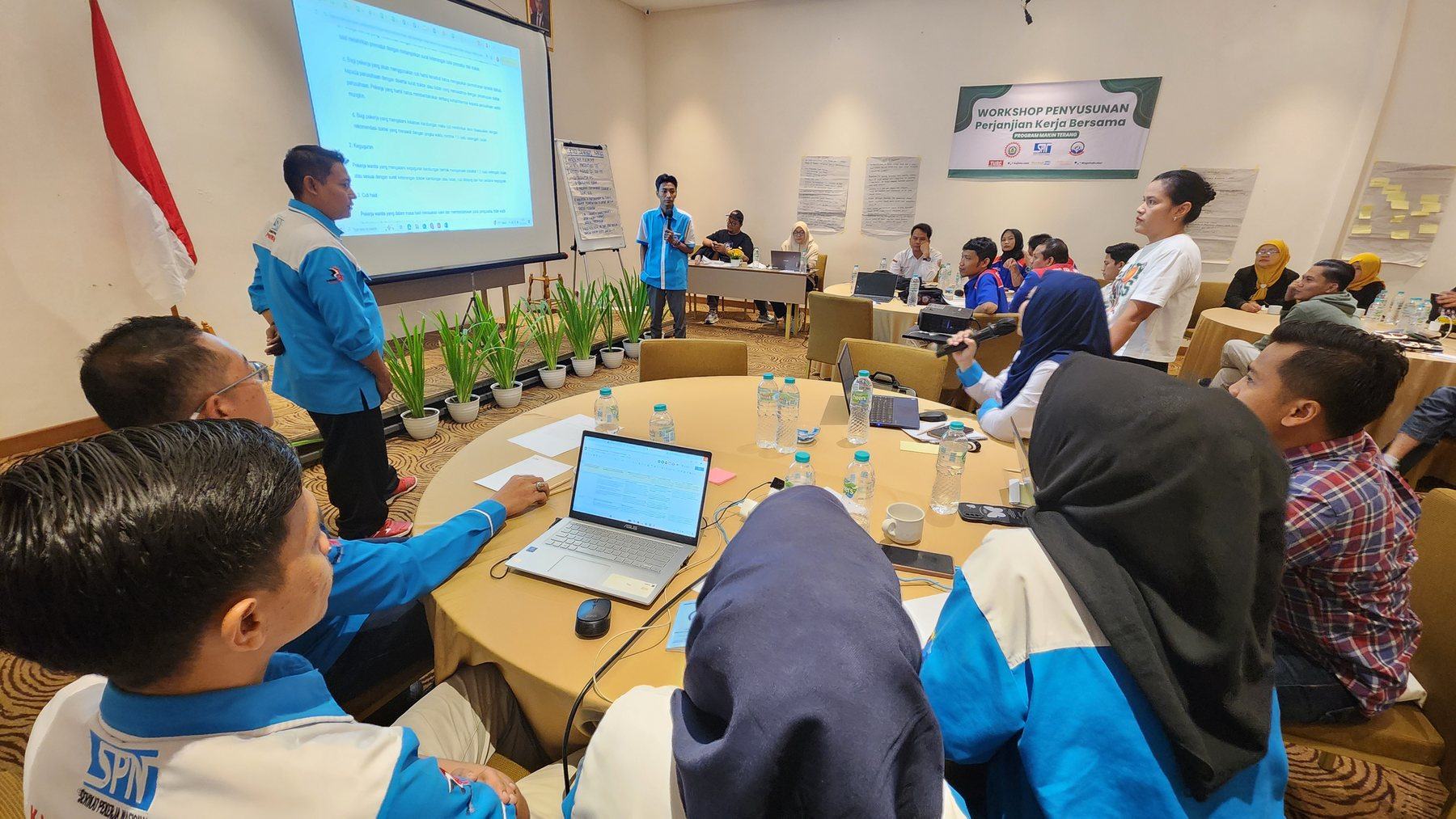
meet or exceed Living Wage estimates
What this means
As of January 2025, in 26 countries worldwide, the Minimum Wage meets or exceeds the Living Wage estimate for a Typical Family (Lower Bound).
Tools in focus
Where the Minimum Wage meets a Living Wage
The Minimum Wage vs Living Wage tool compares statutory Minimum Wages with WageIndicator Living Wage estimates across 173 countries.
Open the comparison toolWorker voice in the age of AI
AI, Collective Bargaining, and worker power
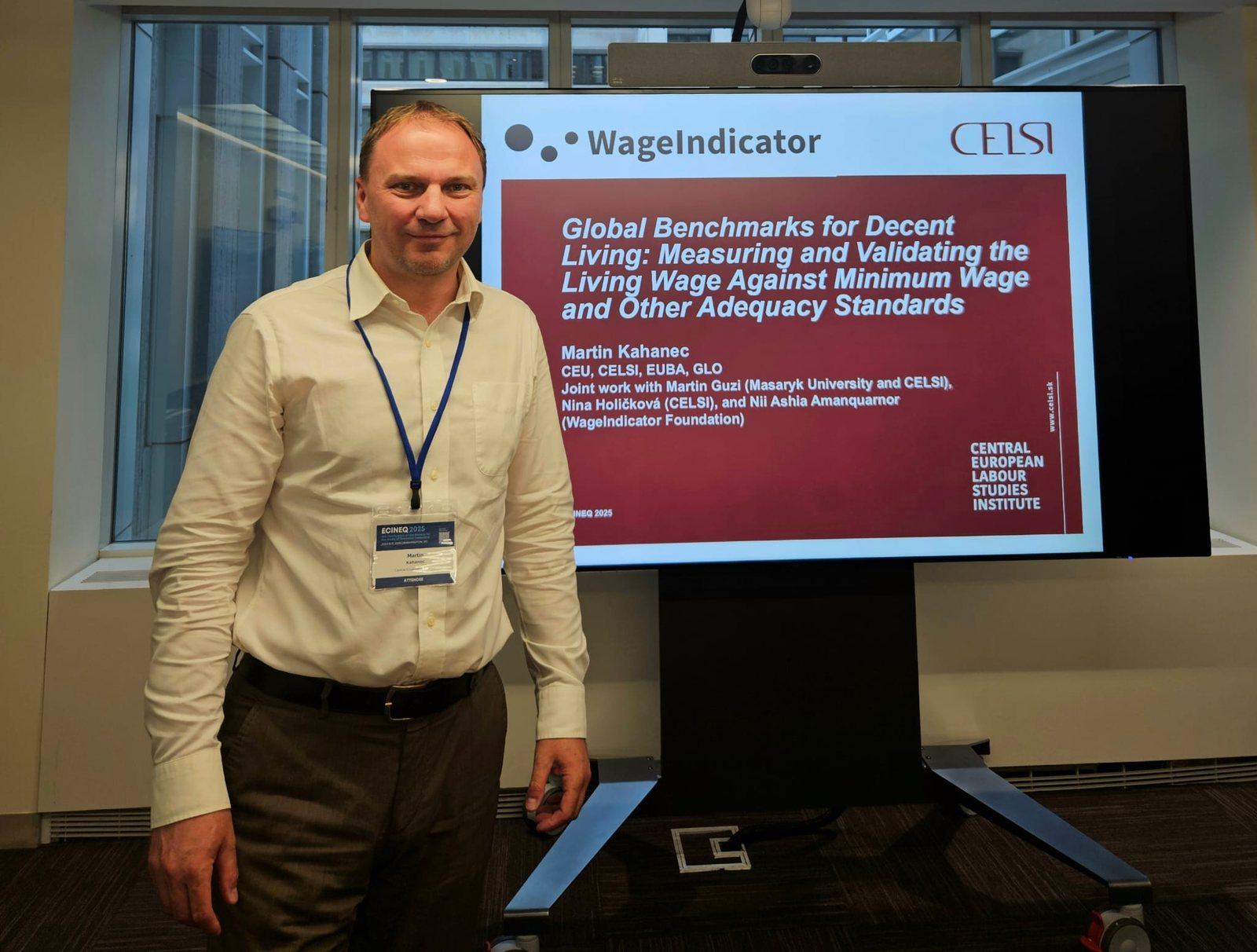
Since 2023, WageIndicator and CELSI have worked with UNI Europa and the Friedrich Ebert Stiftung's Competence Centre on the Future of Work on Collective Bargaining practices for AI and algorithmic management in the European services sector.
Interview
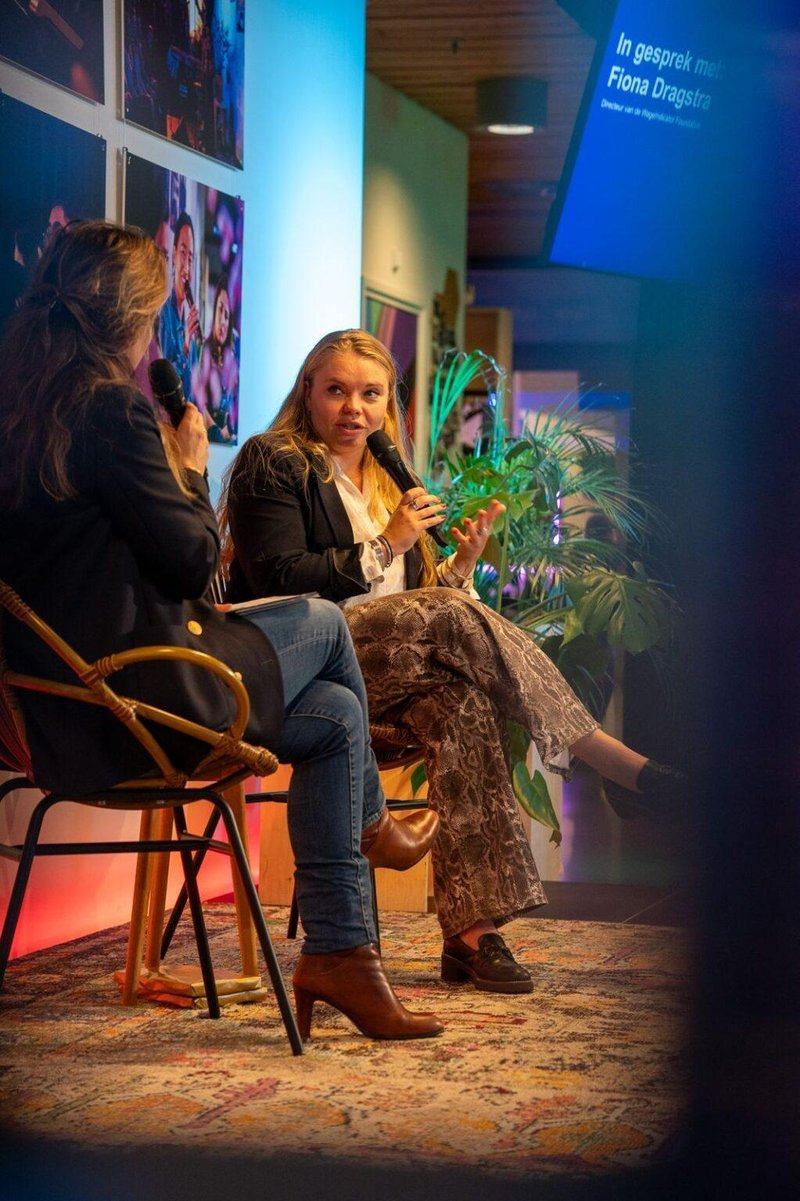
Birte Dedden and Oliver Philipp on AI clauses
The interview explains why unions are moving from broad concern about AI toward specific Collective Agreement language.
Read the full interview

From the interview
What unions can use now
Birte and Oliver turn the AI research into practical bargaining questions: what technology is being used, who can challenge it, and how workers share in its benefits.
“AI wasn’t just a tech issue but it was and is a workers’ rights issue.”
Birte Dedden
The project reframes AI and algorithmic management from a technical trend into something that needs to be put on the Collective Bargaining agenda.
“Collective bargaining on the other hand can act fast at the local level, closing gaps where laws fall short.”
Oliver Philipp
Agreements can close gaps while regulation and enforcement catch up.
“And demand transparency. If your employer is using AI, ask: What is it? How does it work? What’s the impact on workers?”
Birte Dedden
Unions need to ask what AI is used, how it works, and what it does to workers.
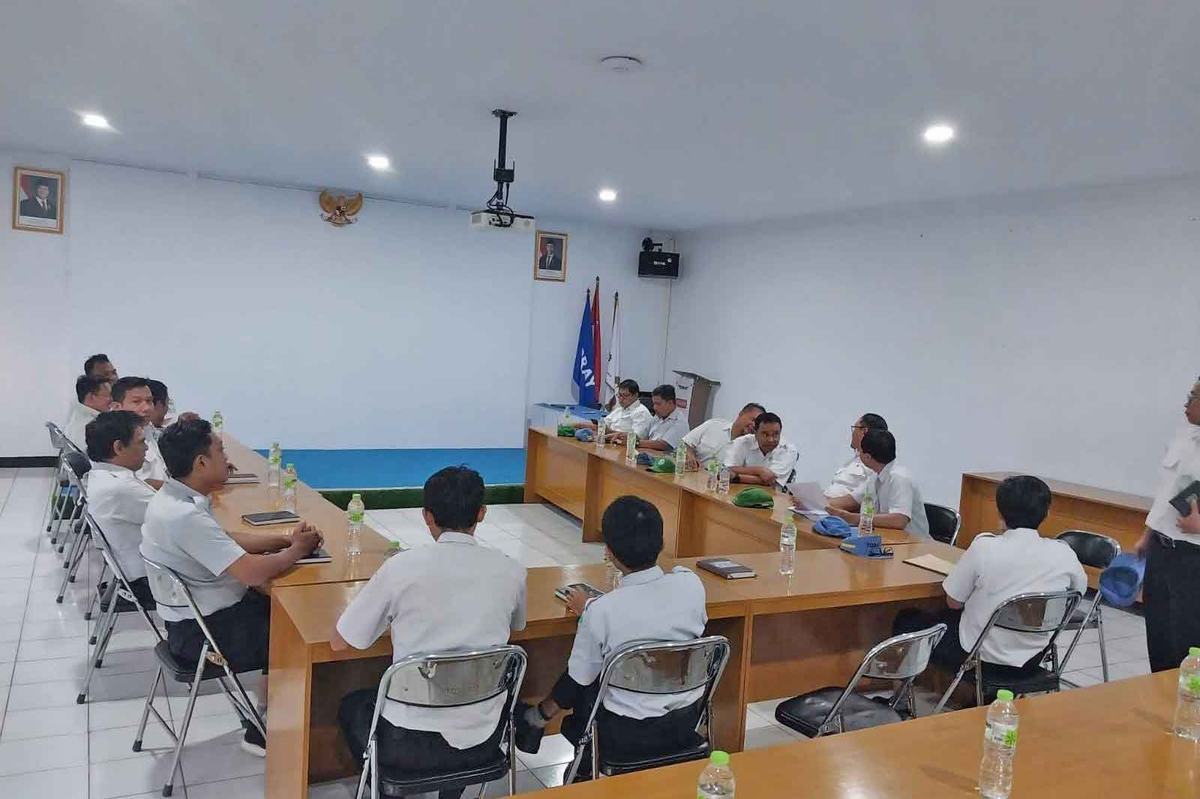
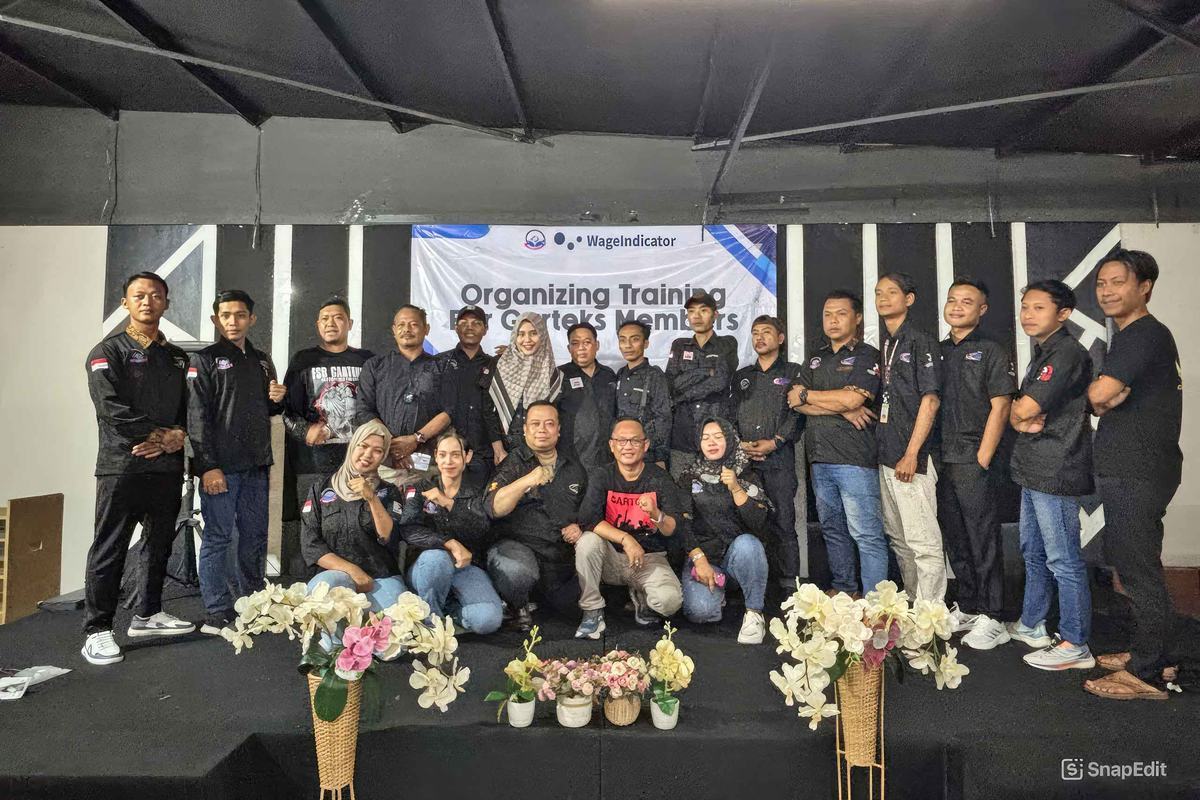
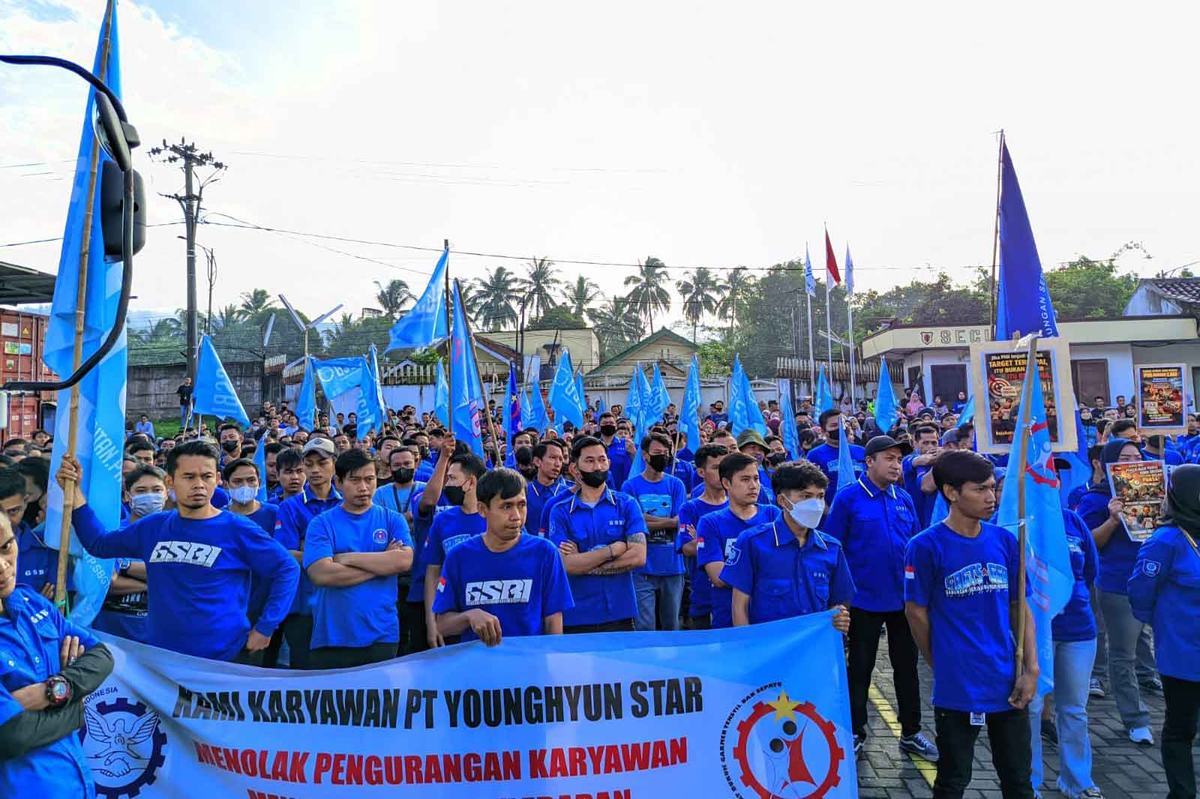
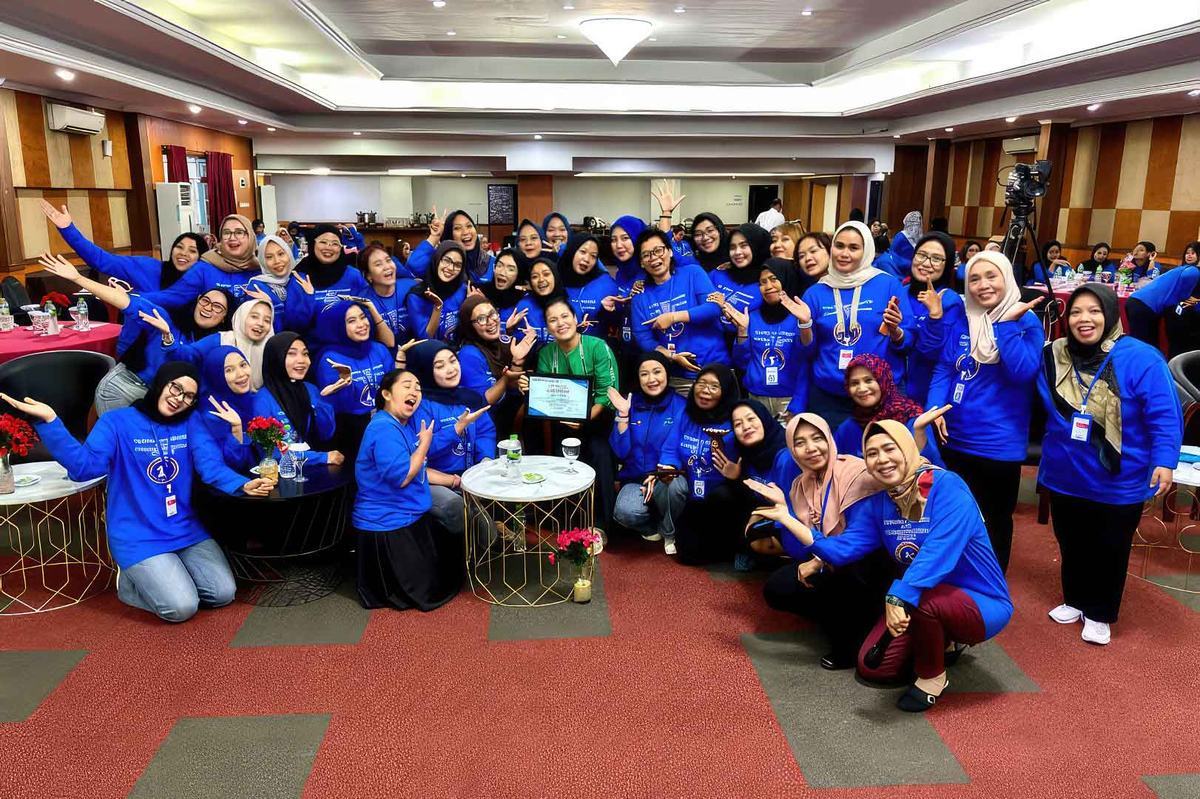
Ten years in Indonesia
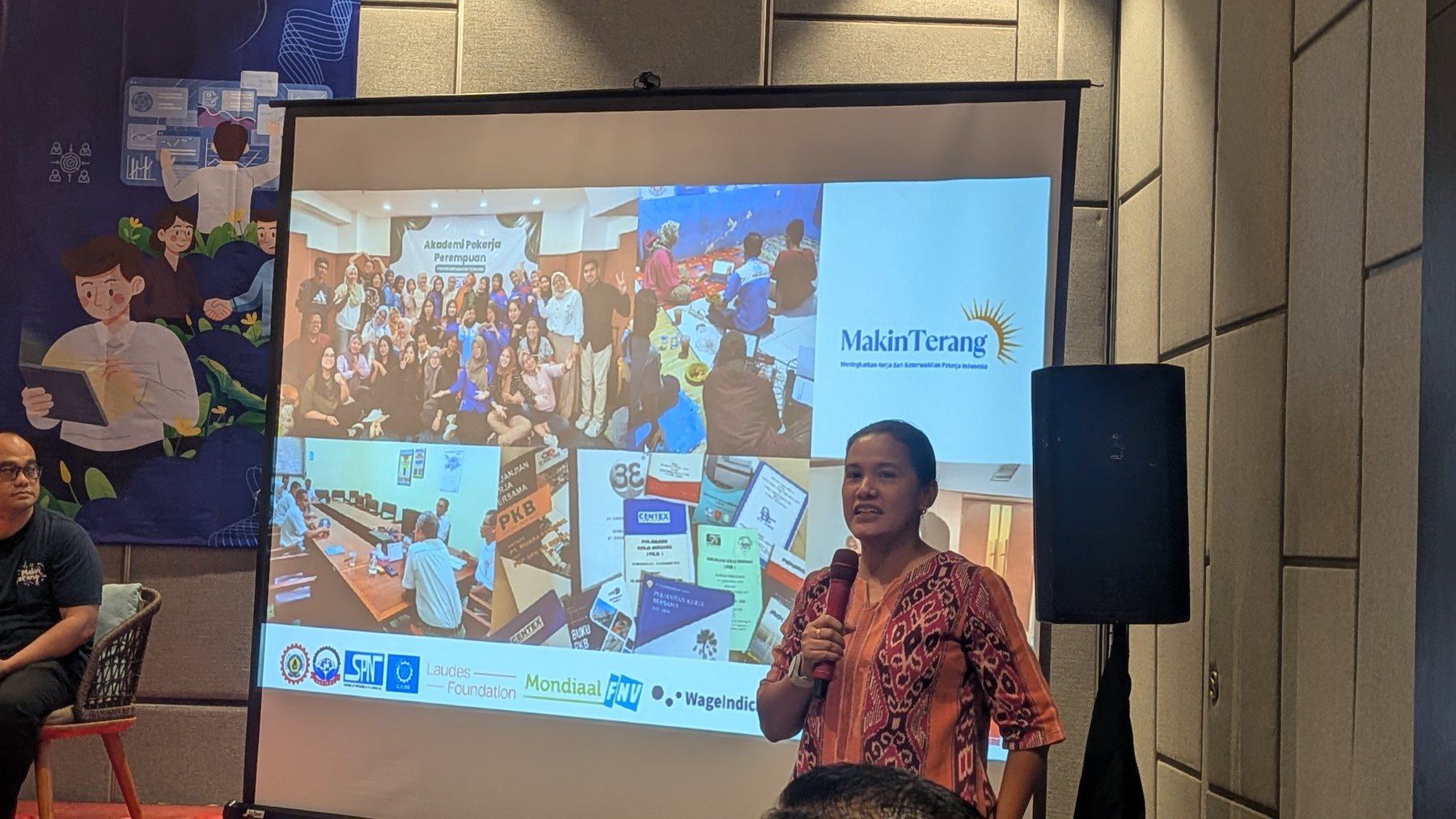
A decade of Makin Terang
One of WageIndicator's largest programmes improves working conditions and worker representation in the textile, garment, footwear, and leather industries through data-driven, worker-centred approaches.
Read the follow-up story- Workers reached
- 48,778
- Unions strengthened
- 300
- Lives
improved - 64,000
“In the past, when negotiating with management, you used your muscles, now you use your brain and data”
Worker in PT Coats Rejo
“I prefer it when union officials come to a bipartite meeting fully prepared and supported by good data and arguments”
Rini Arinasari, HR Manager of PT. Dean Shoes
Evidence in action
Projects, partnerships, and research
2025 brought new multi-year programmes alongside European Commission funded work on working conditions in garment factories in Bangladesh, the European collective bargaining and social dialogue agenda, living wage implementation, and the kick-off of the India Workforce Index.
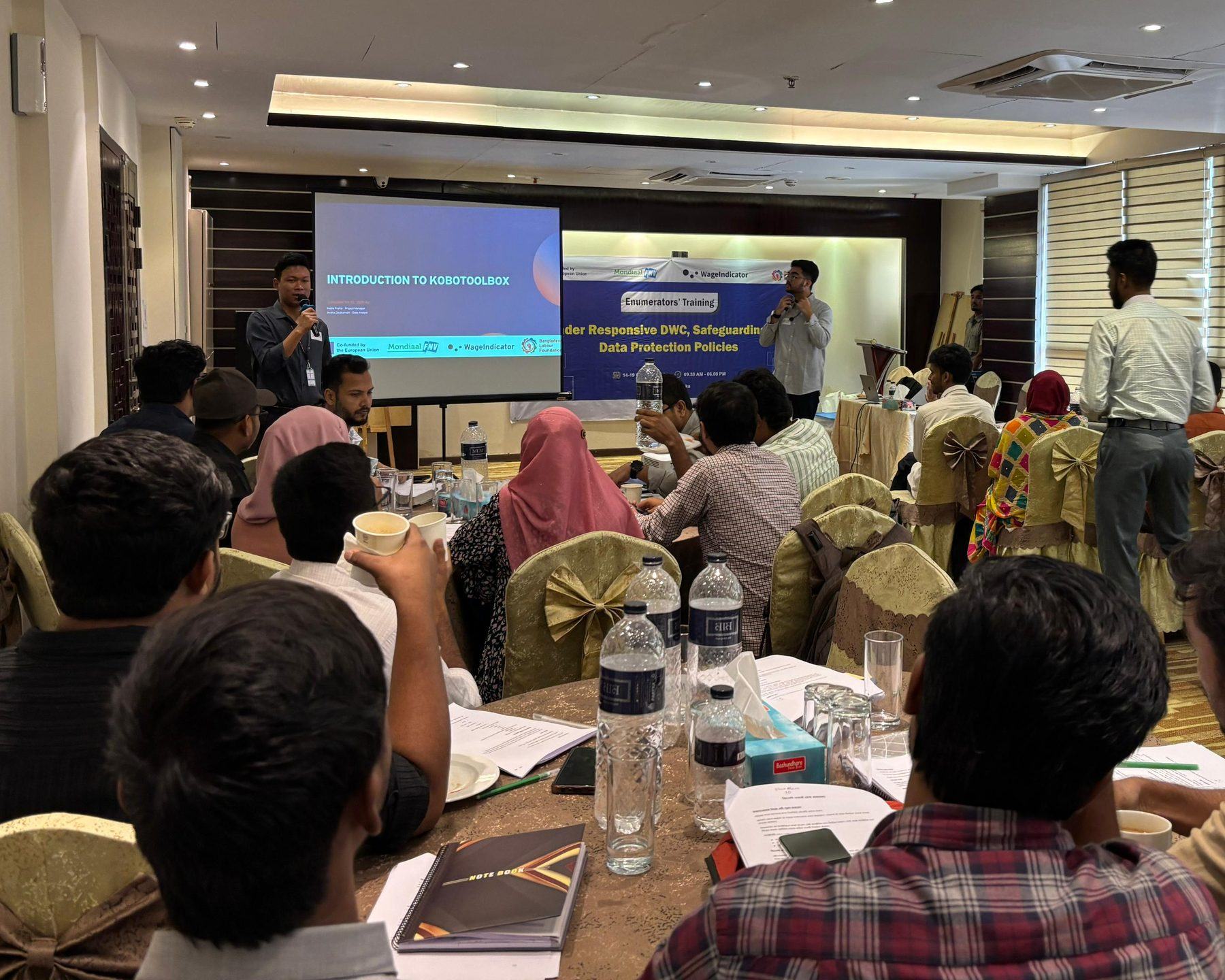
Decent Work Due Diligence
A new EU-co-funded programme strengthening local civil society and trade unions to advance decent work and human-rights due diligence.
Explore project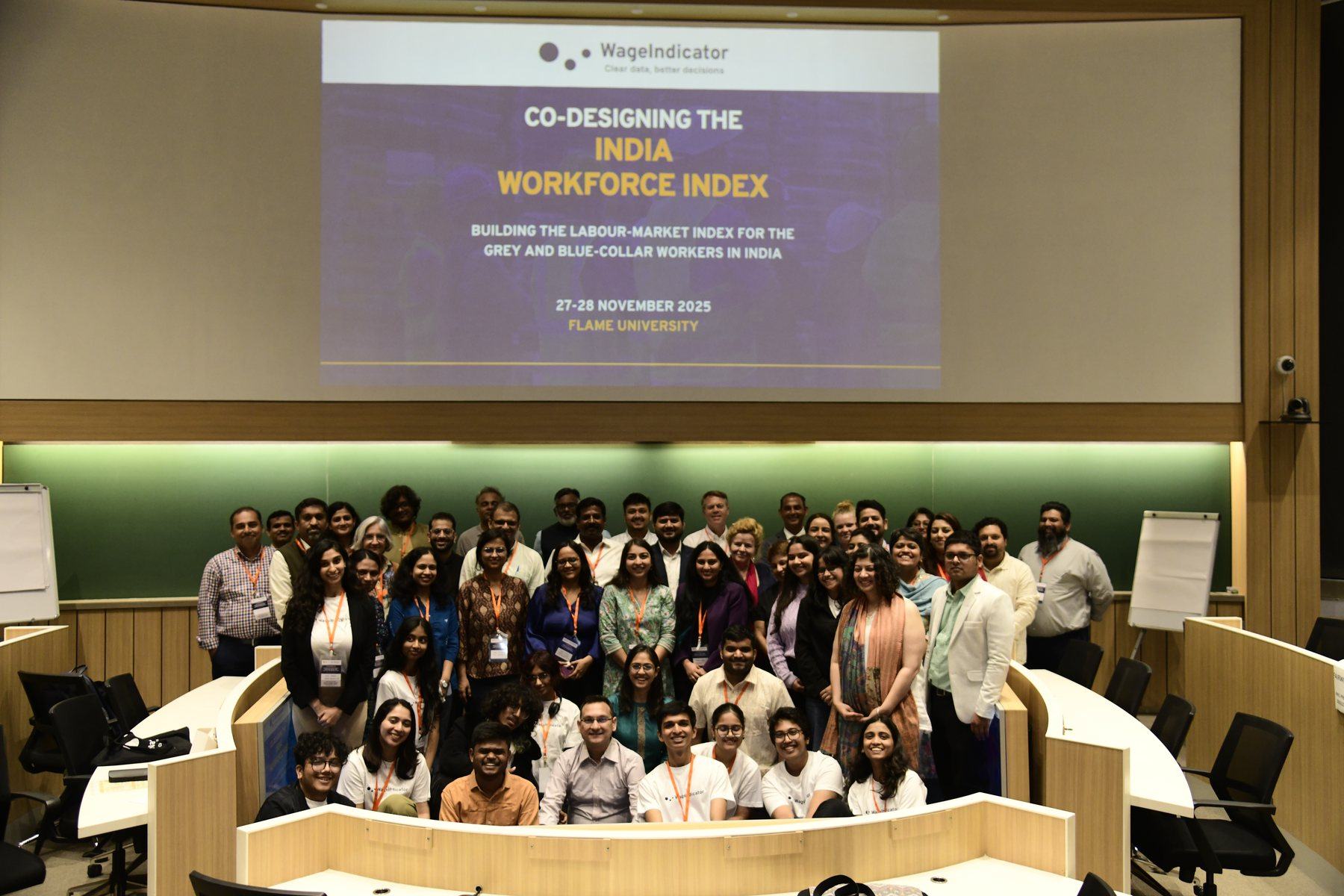
India Workforce Index
A new index of job-market trends for blue- and grey-collar workers, in collaboration with FLAME University and the Indian Institute of Management.
Explore project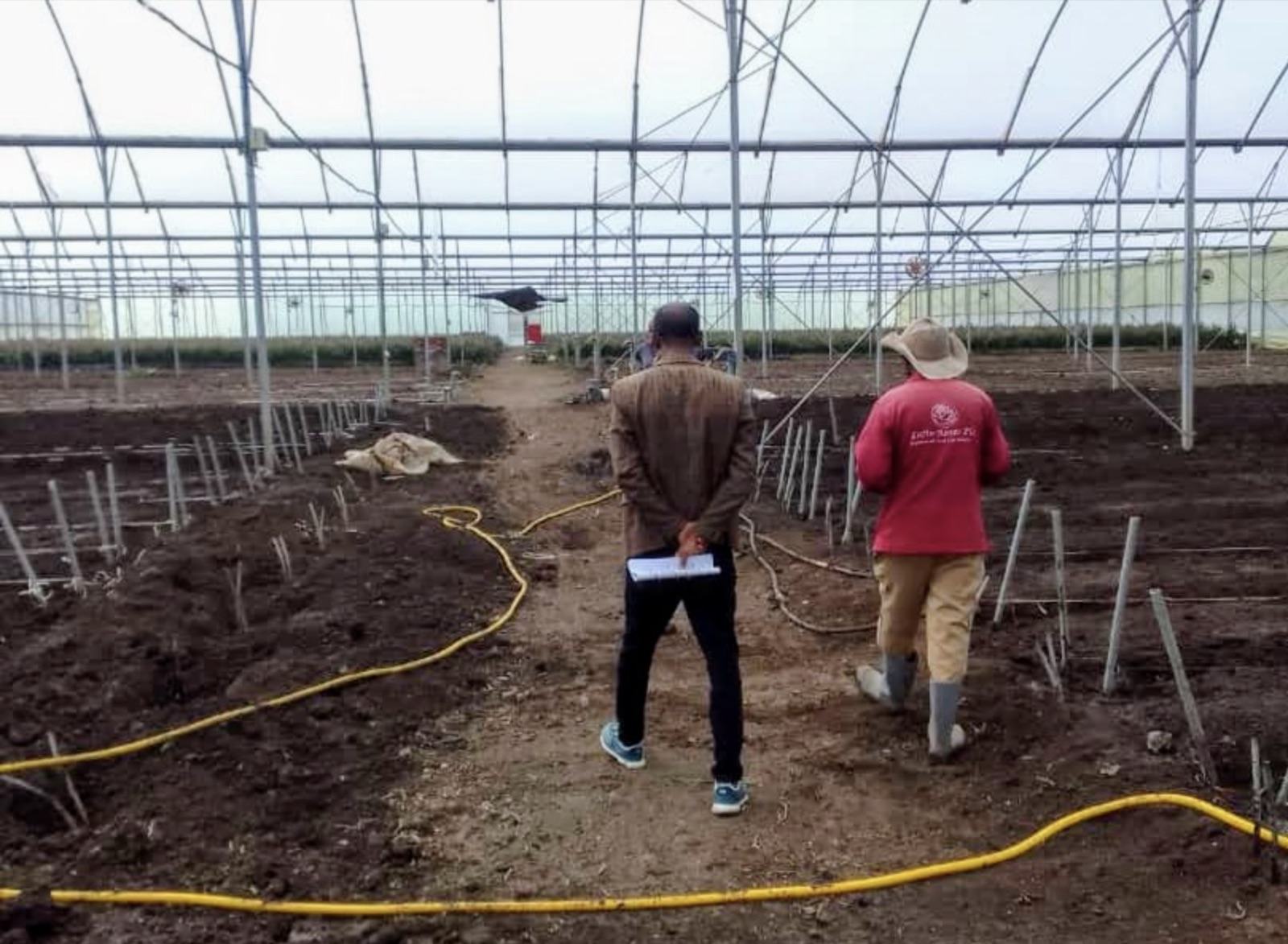
Living Wages in Flowers, Garment & Leather
Living Wages and women-only learning circles in Ethiopia's flowers, garment and leather sectors.
Explore project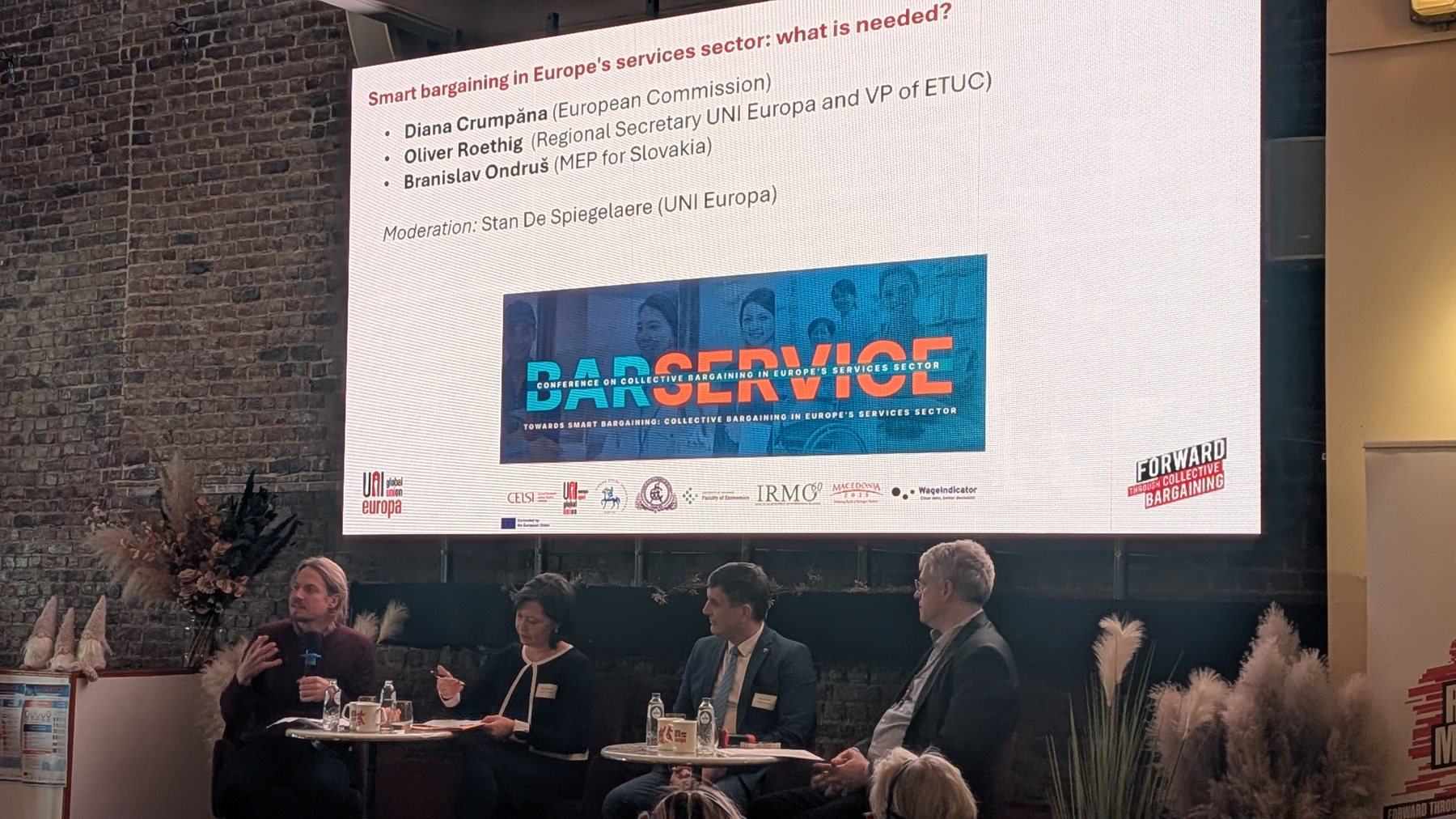
BARTIME and BARSERVICE conclude
BARTIME and BARSERVICE concluded in 2025, producing publications on working time and services-sector bargaining.
India Workforce Index
From launch to co-design
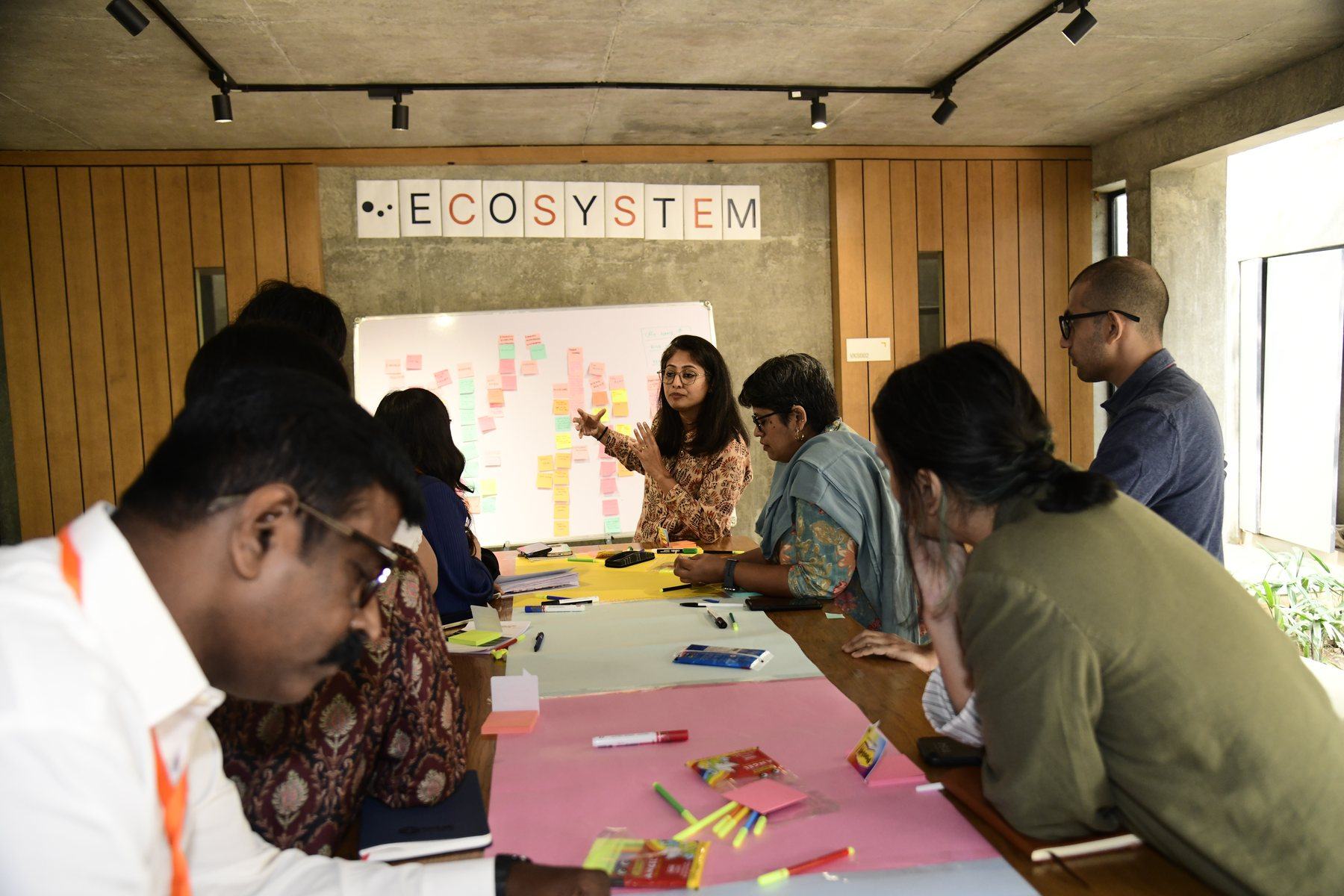
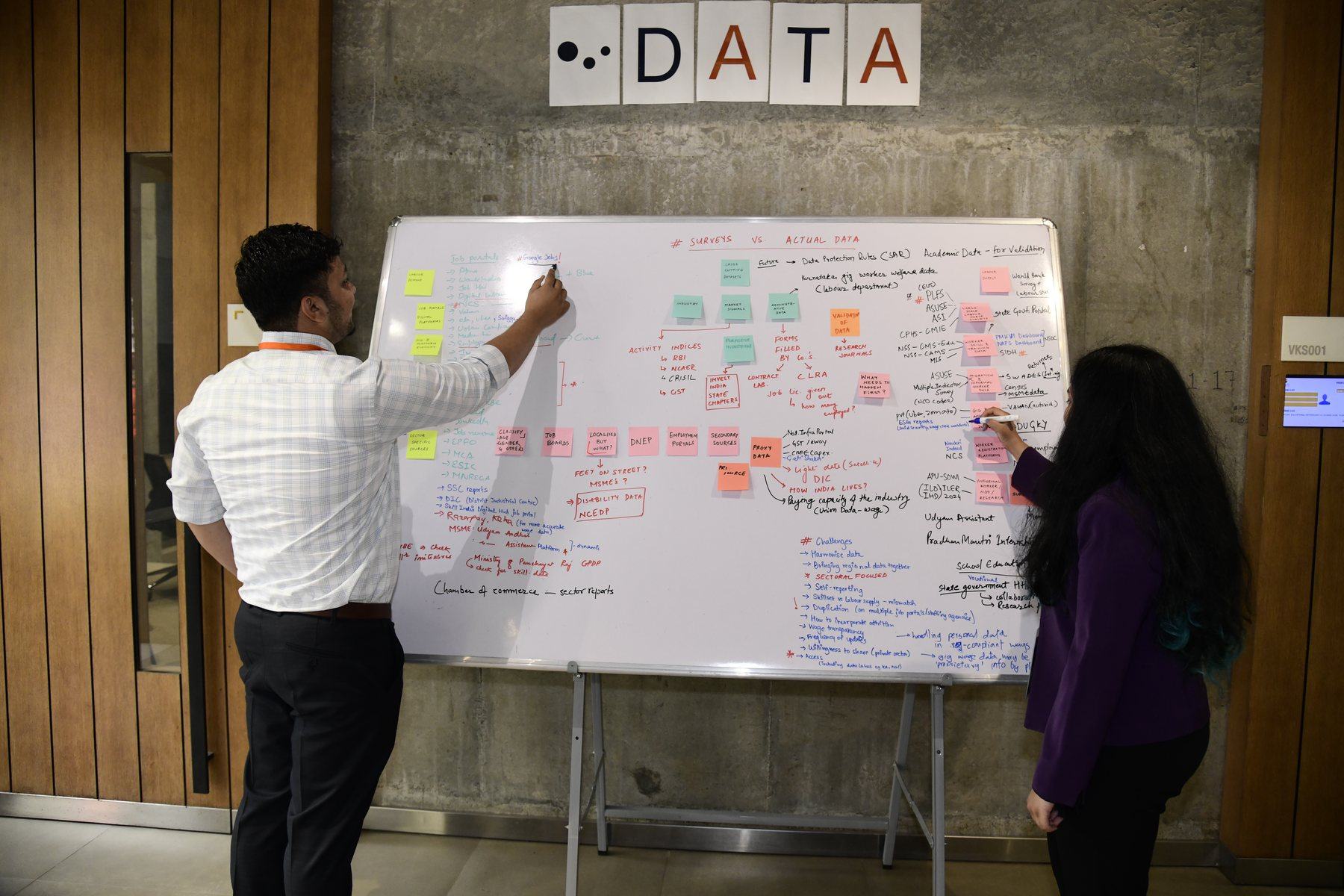
The India Workforce Index launch at FLAME University brought partners together for a public presentation, ecosystem discussion, and collaborative data mapping.
Learn more about the event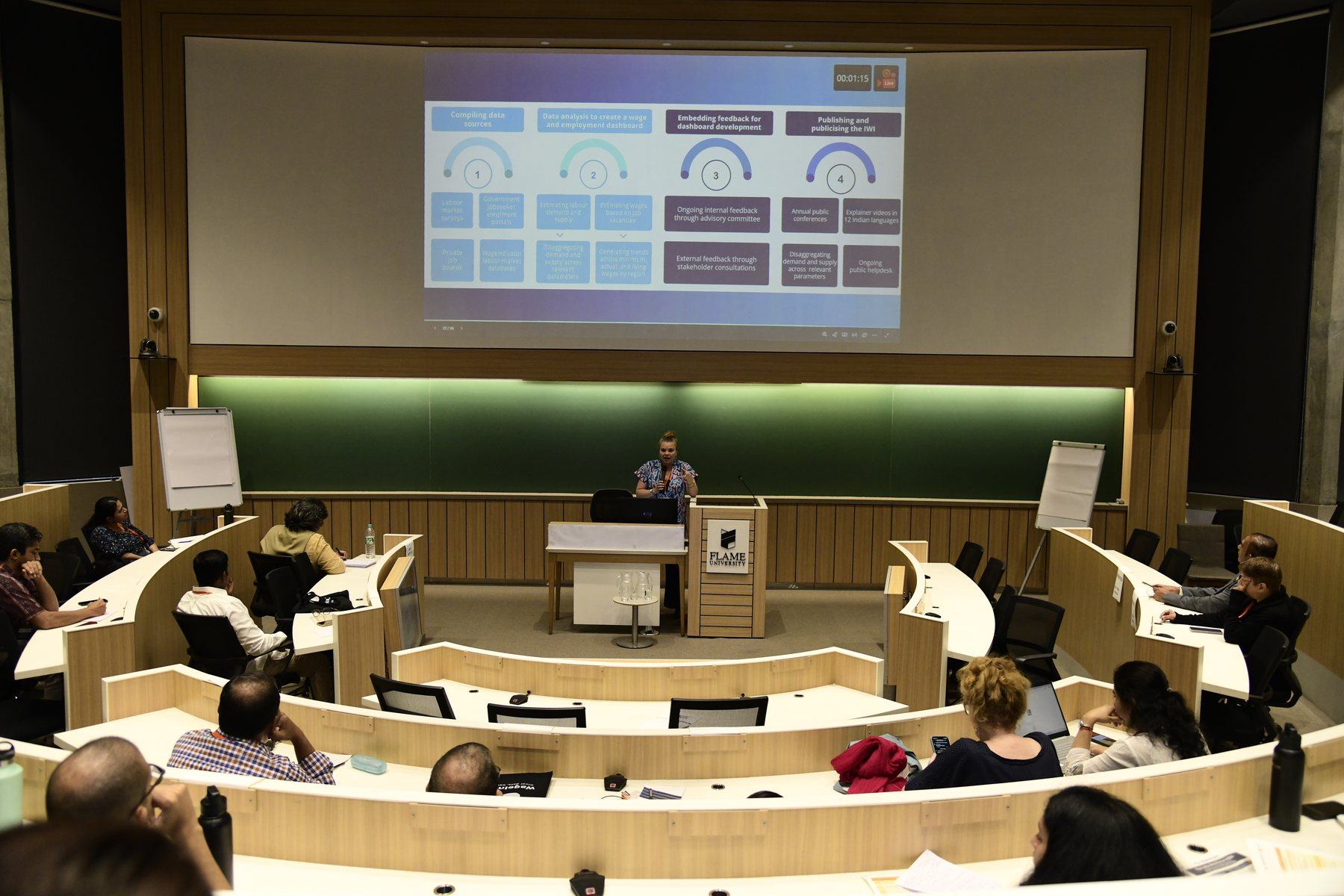
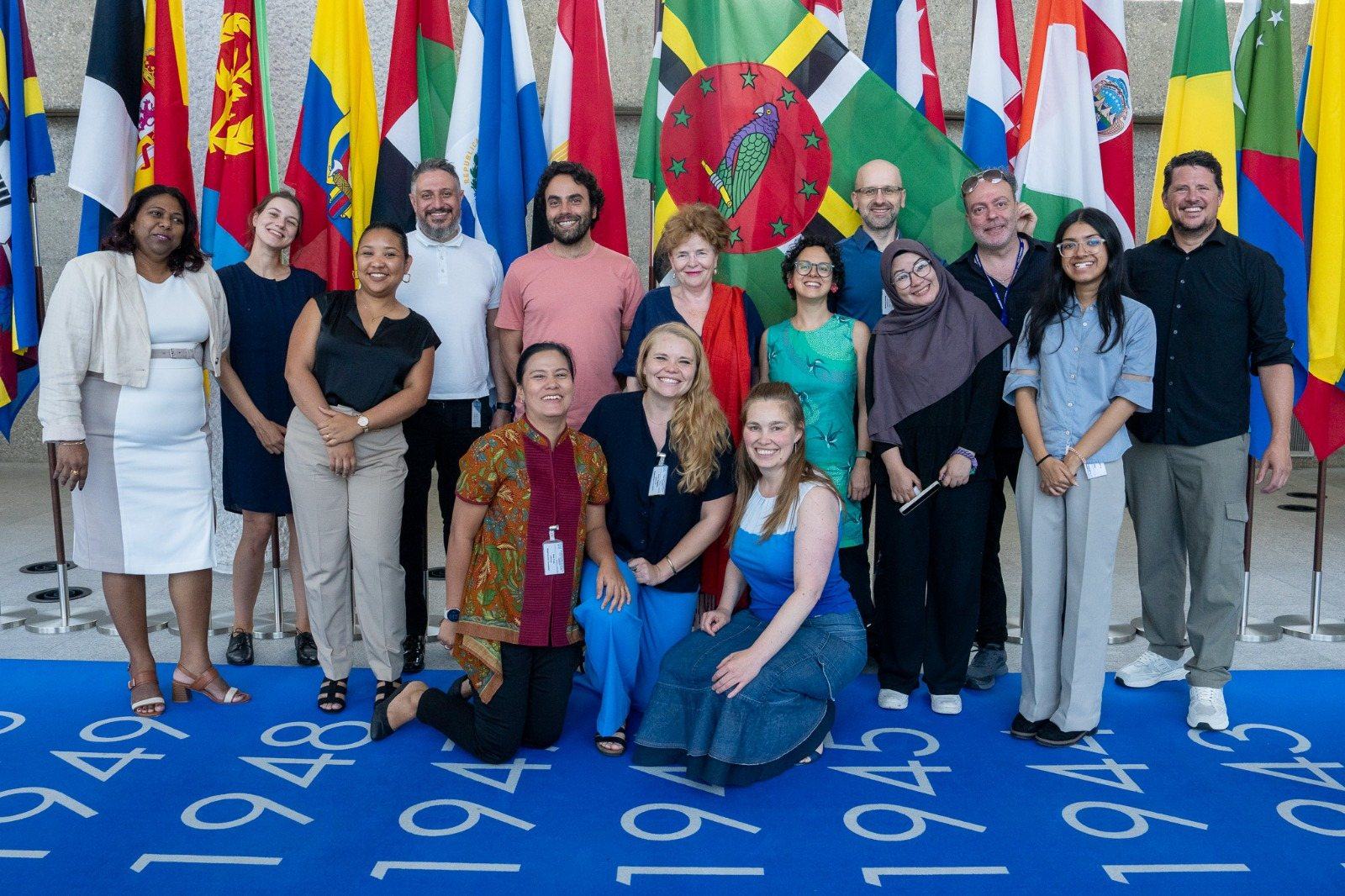
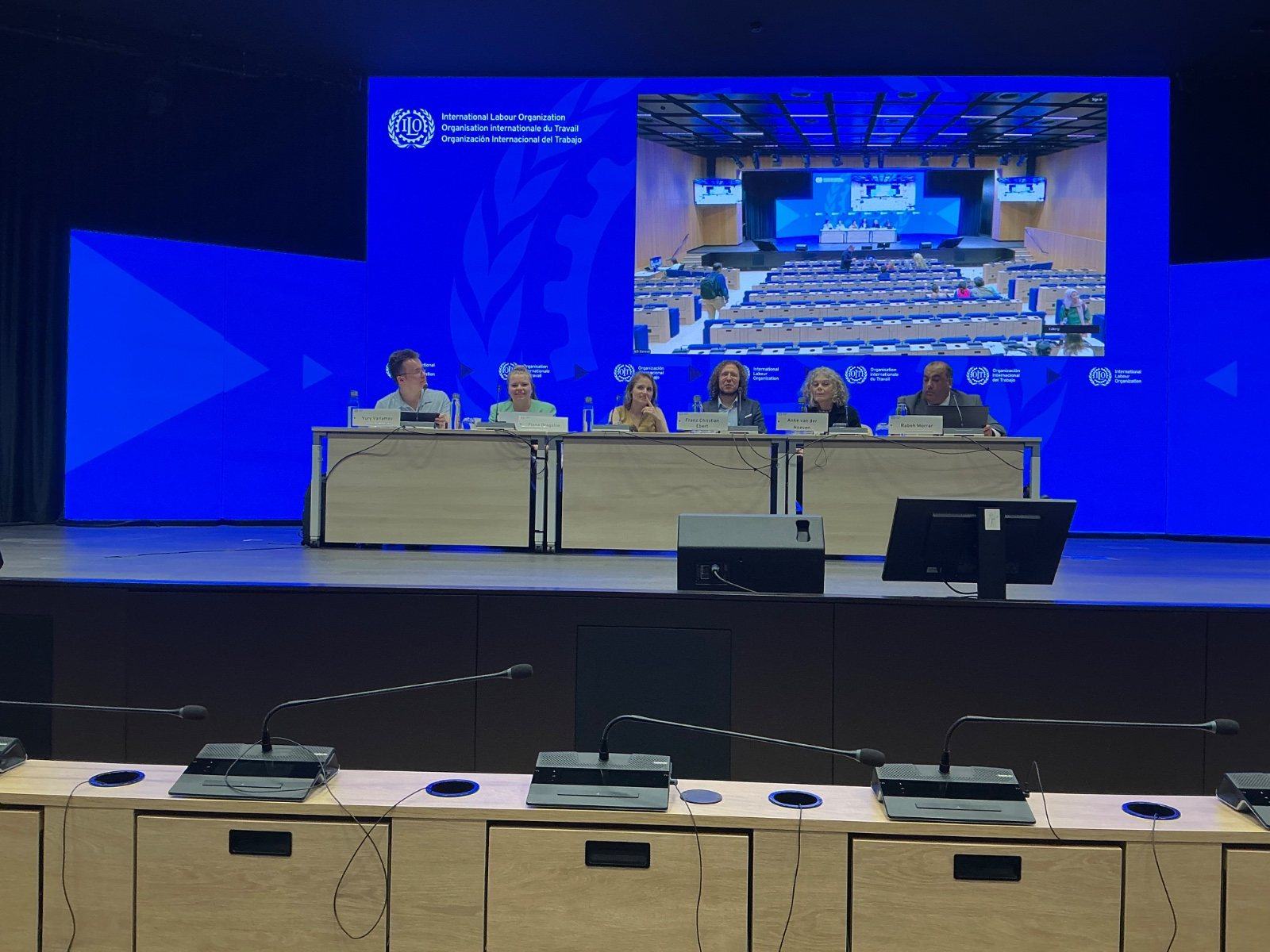
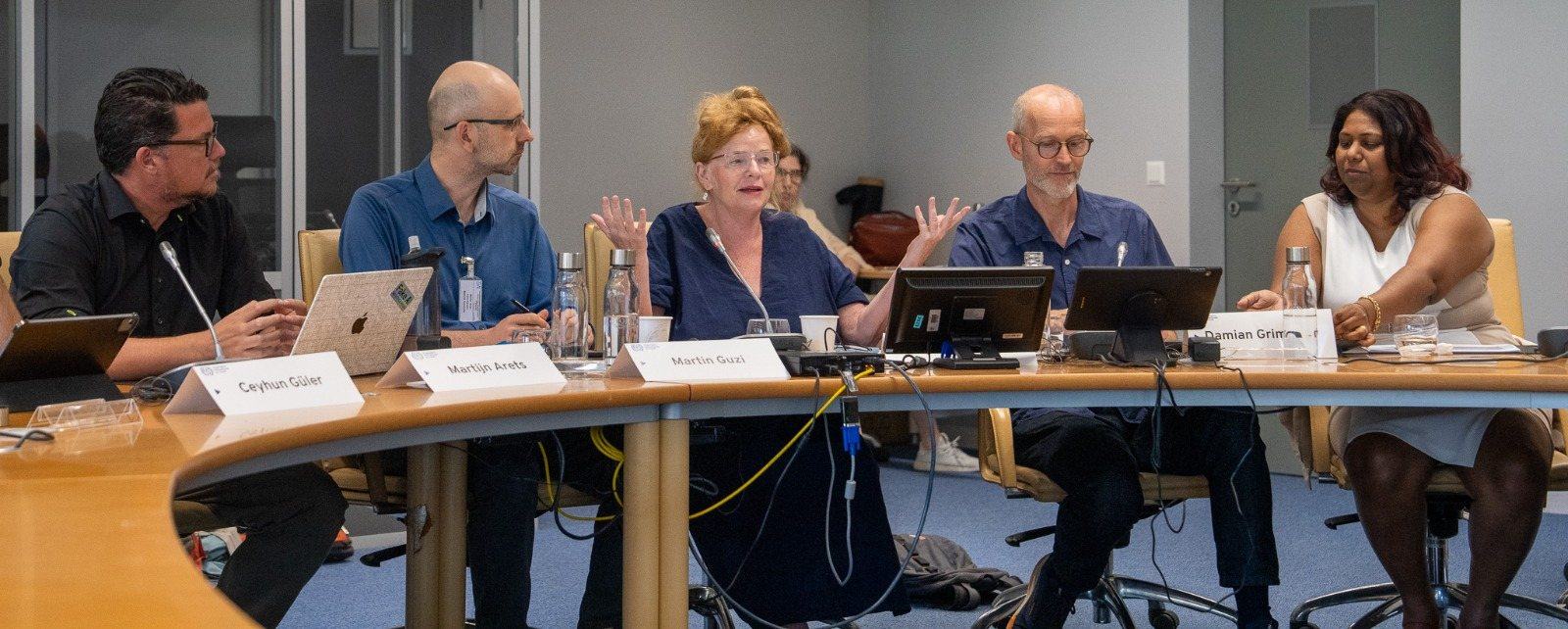
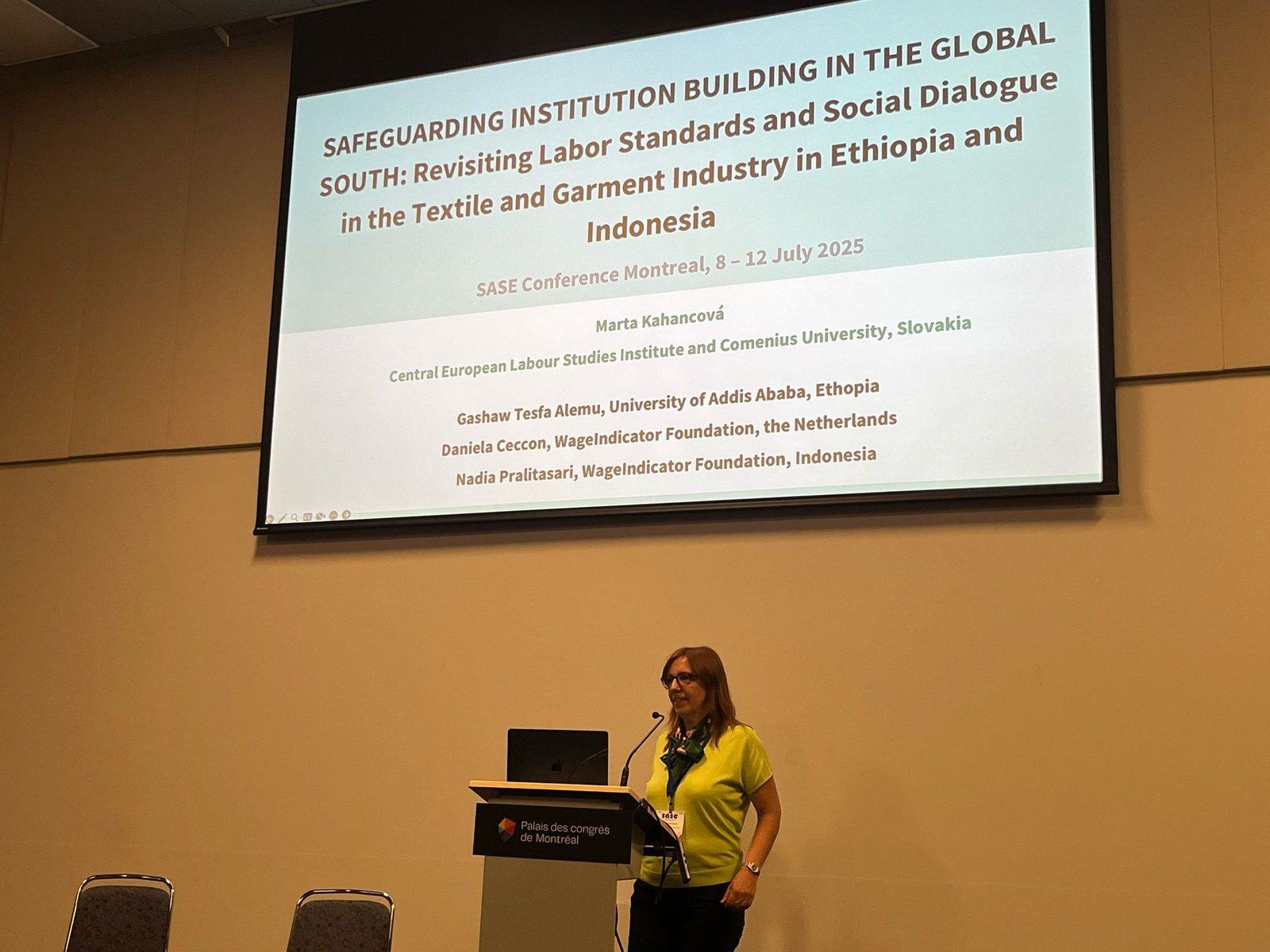
Regulating for Decent Work 2025, Geneva
At the ILO's 9th Regulating for Decent Work conference, WageIndicator brought an international team and hosted sessions on working time, Living Wages, and sustainable digital futures.
Does the night shift still pay?
Collective Bargaining over working hours and premium pay, and its role in wage adequacy.
Establishing fair compensation
How Living Wages help secure decent work, reduce poverty, and improve economic stability.
Transitions to sustainable digital futures
Green clauses, the Labour Rights Index, and the SDGs advancing workers' rights.
The people behind the work
People, communications, and governance
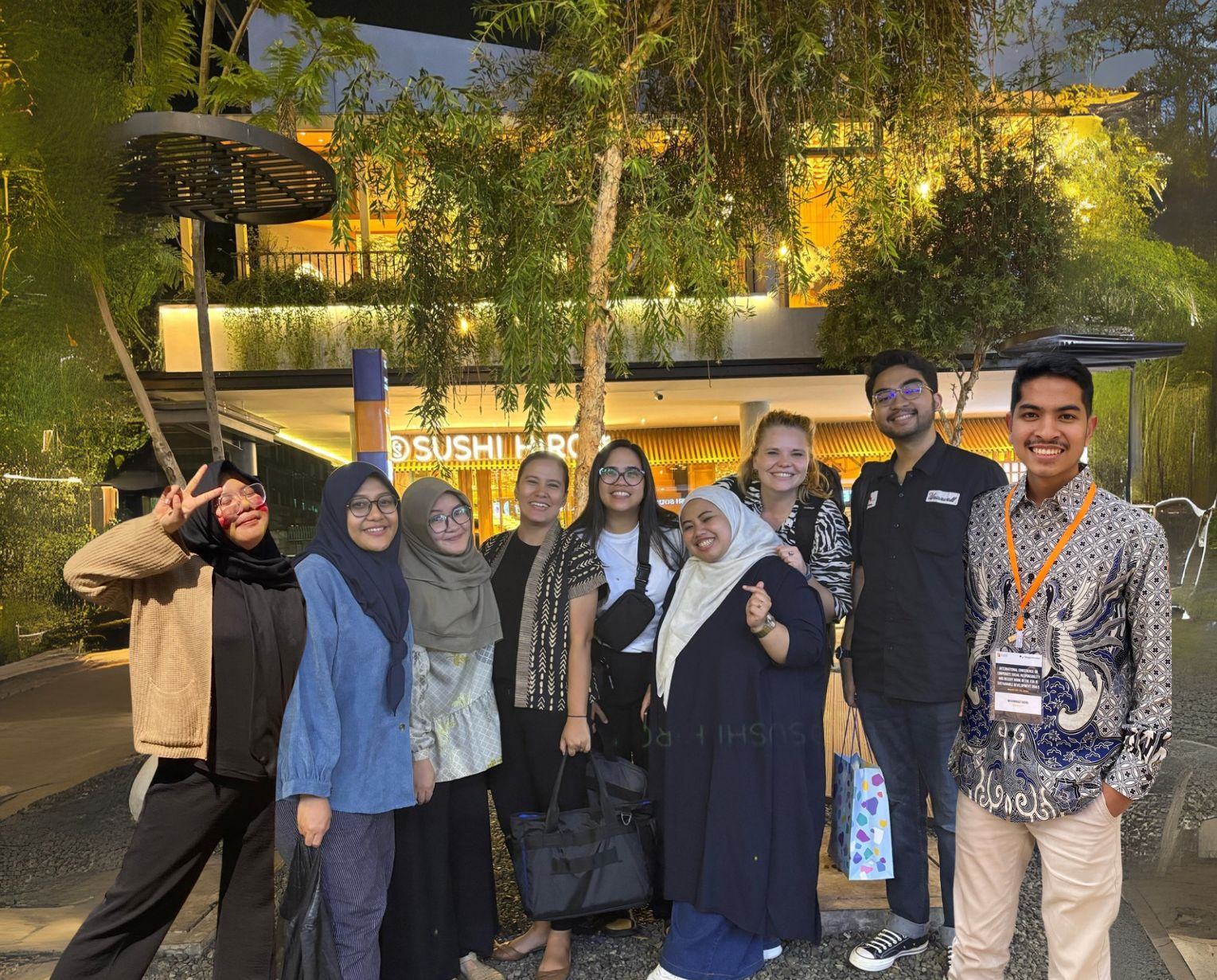
A distributed global team of 75 staff carried the work in 2025 across 55 countries and 50 nationalities, with strengthened communications, safeguarding, and governance.
Staff from 50 nationalities
Staff brought local knowledge, language capacity, and regional perspective to the work across 55 countries.
Meet our teamInterns
Interns from 27 colleges and universities supported research, data, communications, and local work.
Explore internshipsGlobal data collectors
A distributed network maintains databases across countries, languages, and local regulatory contexts.
Partners and specialists
Universities, trade unions, employer associations, multilateral institutions, companies, and specialists contributed to the work.


Safeguarding
All safeguarding policies were reviewed for 2025.
Digital security
Kamara Global supported digital-security training.
Ethical AI
A new ethical-AI policy chapter was prepared for staff.
Governance
The Supervisory Board met through 2025 with an audit commission and external accountants.
Financials
Growth in income, a stronger reserve
2025 strengthened both income and reserves. This section summarizes the headline figures; the complete audited statements are available in the official Annual Report.
Income-generating activities
EUR 3.18m of realised income came from income-generating activities.
Grants and funds
EUR 1.24m came from grants and funds.
Database development
Database development remained the largest direct-expense line.
EUR 1.43m result before taxes
A strong positive result lifted the general reserve to EUR 2.22m at year end, nearly double the prior year.
EUR 3.99m in bank and cash
Liquidity rose 74% year on year, keeping the foundation well able to meet its liabilities.
EUR 4.58m budgeted for 2026
Expected 2026 revenue from income-generating activities and grants.
Looking to 2026
A year of renewal
2025 set the groundwork. In 2026, WageIndicator turns the page with a renewed identity and platform, and a return to the global stage.

A new brand
A refreshed public identity and clearer digital presence.
Read the new brand story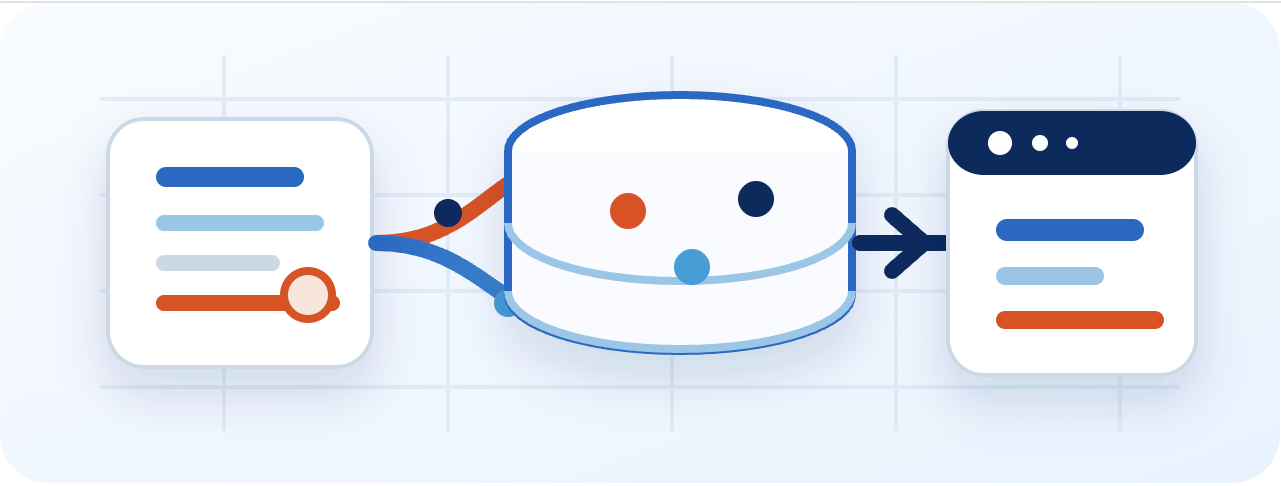
New infrastructure
A stronger platform for publishing and maintaining WageIndicator data.
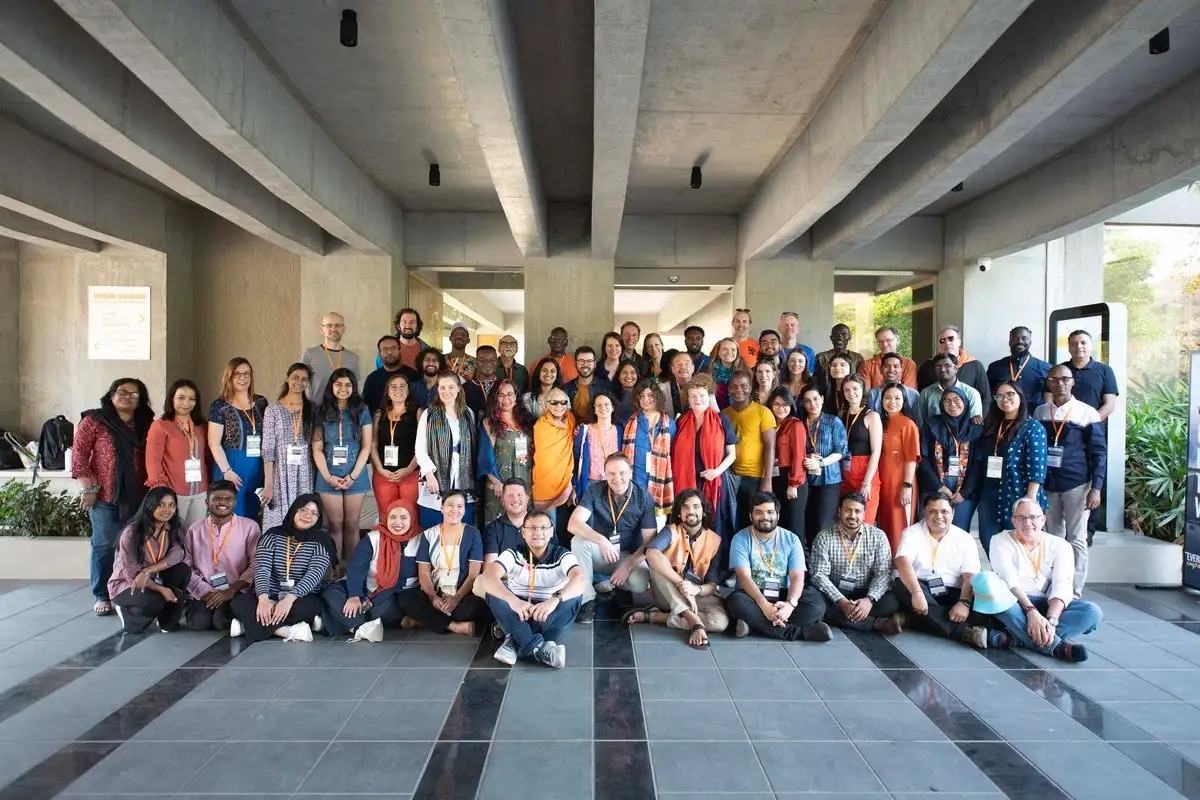
A second global conference
A return to FLAME University, Pune.
Explore the 2026 call for papersOfficial source
Annual Report 2025
This web edition presents selected highlights from WageIndicator Foundation's 2025 Annual Report, with design, coding, editing, and quality checks supported by AI tools. The full report remains the formal record for the complete narrative, governance, auditor material, and financial statements.